361 Students
Manual Handling and Safe Lifting Techniques course teaches you everything on the topic thoroughly from scratch so you can achieve a professional certificate for free to showcase your achievement in professional life. This Manual Handling and Safe Lifting Techniques course is a comprehensive, instructor-guided course, designed to provide a detailed understanding of the nature of the related sector and your …
Manual Handling and Safety Management provides essential knowledge for anyone responsible for lifting, carrying, pushing, pulling, or supporting loads in the workplace. The course introduces key legislation and guidance while exploring common manual handling hazards, workplace injuries, and the factors that can increase the risk of musculoskeletal disorders.
Effective manual handling is an important part of workplace health and safety, particularly in industries where employees regularly move materials, equipment, stock or other loads. This course explores how to recognise hazards, assess the level of risk and apply suitable controls to reduce the likelihood of strains, back injuries and other musculoskeletal problems.
Delivered online, the course offers a flexible way to learn about workplace manual handling and manual handling in the workplace. Learners can study at their own pace with lifetime access, mobile-friendly content, tutor support and a certificate on completion, making it suitable for Canadian workplaces across industrial, commercial, healthcare and other sectors.
This course develops a clear understanding of manual handling risks and workplace safety responsibilities.
By completing it, learners will be able to:
This course is suitable for anyone involved in lifting, moving or managing loads at work.
It can benefit:
Effective manual handling management can help workplaces identify hazards and reduce avoidable risks.
Key reasons to study include:
Manual handling training can complement roles across logistics, warehousing, manufacturing, healthcare and other workplaces where employees regularly move loads. Salary depends on occupation, province, experience and employer. Canadian Job Bank reports a national median wage of CAD $22.00/hour for material handlers.
Salary figures vary by occupation and region. For material-handling roles, Job Bank reports national wages of CAD 16.55–30.29/hour, with a CAD $22.00/hour median.
No formal previous qualification in manual handling is required to enrol.
dAll of our courses, including this Manual Handling and Safety Management, are fully accredited, providing you with up-to-date skills and knowledge and helping you to become more competent and effective in your chosen field.
All of our courses are accredited by the CPD Quality Standards as conforming to universally accepted Continuing Professional Development (CPD) guidelines.

The Quality Licence Scheme (QLS) is a trusted endorsement framework that certifies high-quality, non-regulated training programmes across various sectors.

The Association of Healthcare Trainers (AoHT) promotes high-quality healthcare training, supporting providers to deliver relevant, industry-aligned education and improve professional standards.
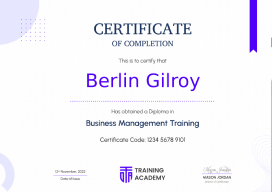
Once you’ve successfully completed your course, you will immediately be sent a digital certificate. Also, you can have your printed certificate delivered by post (shipping cost CA$9.99). All of our courses are fully accredited, providing you with up-to-date skills and knowledge and helping you to become more competent and effective in your chosen field.
This module introduces the principles of manual handling and explains why it is an important workplace safety consideration. Learners explore relevant legislation, guidance and responsibilities associated with handling tasks. It establishes the foundation for understanding safer handling practices.
Explore common hazards associated with lifting, carrying, pushing and pulling loads. This module examines the types of injuries that may result from poor handling practices and considers how workplace conditions and task demands can increase risk.
Learn the fundamentals of assessing manual handling tasks and identifying factors that may create unnecessary risk. The module introduces a structured approach to recognising hazards and considering appropriate control measures in different workplace situations.
This module focuses on strategies for controlling and reducing manual handling risks. Learners explore how workplaces can modify tasks, improve working conditions and consider suitable control measures to reduce exposure to avoidable hazards.
The final module examines key principles associated with safer lifting and load movement. Learners consider how planning, positioning, load assessment and appropriate handling methods can help reduce strain and support safer manual handling activities.
Manual handling in the workplace refers to activities where people lift, lower, carry, push, pull, move or support objects using bodily force. Poorly managed handling tasks can contribute to strains, sprains and musculoskeletal injuries. Appropriate risk assessment and control measures can help reduce unnecessary exposure to these hazards.
A manual handling course typically explains common handling hazards, potential injuries, risk assessment and ways to control risks. This programme also covers relevant legislation and guidance and introduces safer lifting techniques. It is designed to build awareness of how handling activities can be managed more safely.
Manual handling safety is important because lifting and moving loads incorrectly can place significant strain on the body. Repeated or poorly managed tasks may contribute to musculoskeletal injuries. Identifying hazards, assessing risk and using appropriate controls can support a safer working environment.
Anyone who regularly lifts, carries, pushes, pulls or supports loads may benefit from workplace manual handling training. This includes workers in warehouses, healthcare, manufacturing, construction, retail, logistics and other sectors. Supervisors and managers can also benefit from understanding how handling risks are assessed and controlled.
A manual handling risk assessment considers factors such as the task, load, working environment and individual capabilities. The purpose is to identify hazards and determine suitable measures to eliminate or reduce risk. This course introduces the key principles involved in assessing handling activities.
Safe lifting involves planning the task, considering the weight and shape of the load, maintaining a stable position and avoiding unnecessary twisting or awkward movements. The correct approach also depends on the specific task and workplace conditions. Where appropriate, mechanical aids or other control measures should be considered instead of relying solely on physical effort.
| Manual Handling and Safety Management | |||
| Module 01: Introduction, Legislation and Guidance | 00:20:00 | ||
| Module 02: Manual Handling Hazards and Injuries | 00:23:00 | ||
| Module 03: Manual Handling Risk Assessments | 00:20:00 | ||
| Module 04: Controlling and Reducing the Risks | 00:28:00 | ||
| Module 05: Safe Lifting Techniques | 00:15:00 | ||
| Mock Exam | |||
| Mock Exam – Manual Handling and Safety Management | 00:20:00 | ||
| Final Exam | |||
| Final Exam – Manual Handling and Safety Management | 00:20:00 | ||
$40 Original price was: $40.$20Current price is: $20. ex VAT
SAVE 50% - OFFER ENDS SOON
![]() |
01 Year of full Course access
Intermediate
Endorsed Certificate of Compleiton