195 Students
Land is one of Canada’s most valuable natural resources, supporting agriculture, housing, infrastructure, conservation, and economic growth. This Land Management course introduces the principles of responsible land use, planning, soil conservation, and legal frameworks that help ensure land is managed sustainably for current and future generations. Designed for beginners and those already working in agriculture, environmental management, property, planning, or …
Land is one of Canada’s most valuable natural resources, supporting agriculture, housing, infrastructure, conservation, and economic growth. This Land Management course introduces the principles of responsible land use, planning, soil conservation, and legal frameworks that help ensure land is managed sustainably for current and future generations.
Designed for beginners and those already working in agriculture, environmental management, property, planning, or public administration, the course explores land use planning, soil and watershed management, irrigation, land administration, registration, and land law. These topics are relevant across farming, environmental conservation, municipal planning, and land development sectors throughout Canada.
Study online at your own pace with the flexibility to fit learning around your schedule. Earn a certificate that demonstrates your commitment to understanding modern land management practices and take the next step towards expanding your knowledge in this growing field.
Please note: This Land Management Course only gives you the theoretical knowledge that you need to excel in this field. This Course doesn’t entitle you to practise as a professional in this specific field.
This course is ideal for:
All of our courses, including this Land Management Course, are fully accredited, providing you with up-to-date skills and knowledge and helping you to become more competent and effective in your chosen field.
All of our courses are accredited by the CPD Quality Standards as conforming to universally accepted Continuing Professional Development (CPD) guidelines.
The Quality Licence Scheme (QLS) is a trusted endorsement framework that certifies high-quality, non-regulated training programmes across various sectors.
The Association of Healthcare Trainers (AoHT) promotes high-quality healthcare training, supporting providers to deliver relevant, industry-aligned education and improve professional standards.
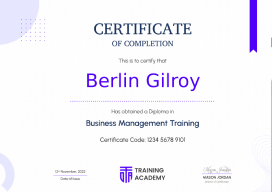
Once you’ve successfully completed your course, you will immediately be sent a digital certificate. Also, you can have your printed certificate delivered by post (shipping cost CA$9.99). All of our courses are fully accredited, providing you with up-to-date skills and knowledge and helping you to become more competent and effective in your chosen field.
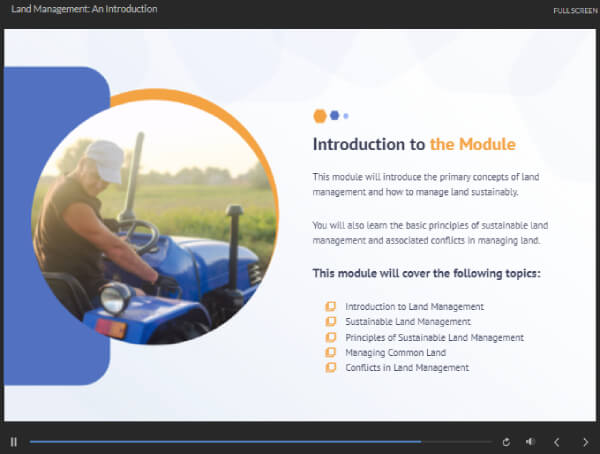
Begin by exploring the fundamentals of land management and its importance in supporting agriculture, environmental sustainability, urban development, and natural resource conservation. You’ll gain an overview of the key responsibilities involved in managing land effectively.
Thoughtful planning helps balance environmental, social, and economic needs. This module explains land use planning principles, zoning considerations, sustainable development, and how land is allocated for different purposes.
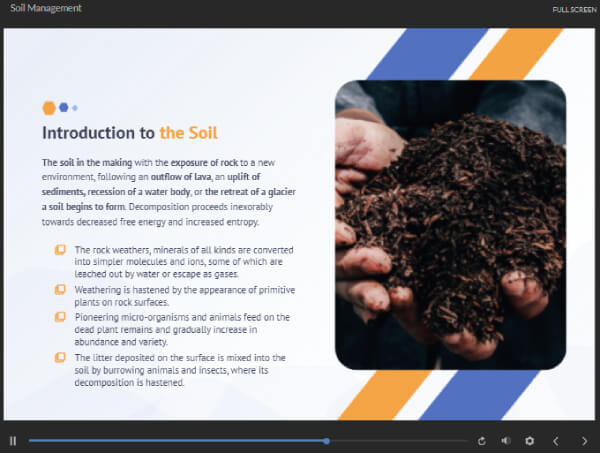
Healthy soil is essential for productive land and thriving ecosystems. You’ll learn about soil properties, fertility, erosion prevention, conservation techniques, and sustainable soil management practices.
Land can be affected by erosion, pollution, overuse, and climate-related challenges. This section explores the causes of land degradation and the strategies used to restore and protect valuable land resources.
Weeds can reduce agricultural productivity and damage natural ecosystems. You’ll examine different weed management approaches, prevention strategies, and environmentally responsible control methods.
Water resources require careful planning and protection. This module introduces watershed management principles, water conservation, ecosystem protection, and integrated approaches to managing water resources.
Efficient irrigation supports healthy crops while conserving water. You’ll explore irrigation methods, scheduling, water efficiency, maintenance practices, and sustainable irrigation management techniques.
Understanding land ownership and administration is essential in land management. This module explains land tenure systems, property administration, ownership rights, and the processes involved in land transactions.
Proper land registration helps establish legal ownership and supports property transactions. You’ll explore registration procedures, acquisition processes, documentation, and the importance of maintaining accurate land records.
Complete the course by examining the legal principles that influence land ownership, land use, environmental responsibilities, and property rights. You’ll gain an understanding of how land law supports responsible land management and sustainable development.
A Land Management course introduces the principles of sustainable land use, land planning, soil conservation, water resource management, land administration, and land law. It helps learners understand how land can be managed responsibly to support agriculture, environmental protection, infrastructure, and community development.
This course is suitable for beginners, agriculture professionals, environmental practitioners, land administration staff, property professionals, urban planning students, and anyone interested in sustainable land use and natural resource management in Canada.
Yes. The course is designed for learners with no previous experience, making it an excellent starting point for anyone interested in land management, environmental studies, or agriculture.
The course covers land use planning, soil management, land degradation, weed management, watershed management, irrigation management, land tenure, land administration, land registration, land acquisition, and land law.
Land management plays a vital role in protecting natural resources, supporting sustainable agriculture, conserving ecosystems, guiding responsible urban development, and helping communities adapt to environmental challenges. Effective land management also supports economic growth while preserving land for future generations.
Land use planning is the process of determining how land should be used and developed to balance environmental, social, and economic needs. It helps ensure that residential, agricultural, commercial, industrial, and conservation areas are managed responsibly.
Yes. While it does not provide professional licensing or certification required for regulated occupations, this course builds foundational knowledge that can support careers in environmental management, agriculture, land administration, property services, and planning-related roles.
Knowledge of land management can support careers such as land administration officer, environmental technician, agricultural technician, GIS technician, land use planner, conservation officer, and environmental consultant, depending on your education and experience.
| Land Management | |||
| Module 01: Land Management: An Introduction | 00:26:00 | ||
| Module 02: Land Use and Land Use Planning | 00:33:00 | ||
| Module 03: Soil Management | 00:35:00 | ||
| Module 04: Land Degradation and Management | 00:26:00 | ||
| Module 05: Weed Management | 00:36:00 | ||
| Module 06: Watershed Management | 00:21:00 | ||
| Module 07: Irrigation Management | 00:29:00 | ||
| Module 08: Land Tenure, Administration and Transection | 00:41:00 | ||
| Module 09: Land Registration and Acquisition | 00:36:00 | ||
| Module 10: Land Law | 00:39:00 | ||
$125 Original price was: $125.$20Current price is: $20. ex VAT
SAVE 84% - OFFER ENDS SOON
![]() |
01 Year of full Course access
Level 3
Endorsed Certificate of Compleiton