206 Students
Kitchen assistants play an important role in maintaining food safety, hygiene, and efficient kitchen operations across Canada’s hospitality, catering, healthcare, education, and food service sectors. This Kitchen Assistant course provides comprehensive knowledge of food safety practices, contamination prevention, food handling procedures, hygiene standards, and workplace responsibilities in food preparation environments. Whether you are seeking your first role in food service …
Kitchen assistants play an important role in maintaining food safety, hygiene, and efficient kitchen operations across Canada’s hospitality, catering, healthcare, education, and food service sectors. This Kitchen Assistant course provides comprehensive knowledge of food safety practices, contamination prevention, food handling procedures, hygiene standards, and workplace responsibilities in food preparation environments.
Whether you are seeking your first role in food service or looking to strengthen your existing knowledge, this course covers essential topics including food safety legislation, foodborne illnesses, temperature control, cleaning procedures, pest management, and safe food handling practices. The knowledge gained can be applied in restaurants, cafés, catering businesses, care homes, hospitals, hotels, and commercial kitchens throughout Canada.
Study online at your own pace and earn a recognised certificate upon completion. Build confidence in food safety and kitchen operations while taking a valuable step towards a career in the food service industry.
Please note: This Kitchen Assistant Course only gives you the theoretical knowledge that you need to excel in this field. This Course doesn’t entitle you to practise as a professional in this specific field.
This course is ideal for:
All of our courses, including this Kitchen Assistant Course, are fully accredited, providing you with up-to-date skills and knowledge and helping you to become more competent and effective in your chosen field.
All of our courses are accredited by the CPD Quality Standards as conforming to universally accepted Continuing Professional Development (CPD) guidelines.
The Quality Licence Scheme (QLS) is a trusted endorsement framework that certifies high-quality, non-regulated training programmes across various sectors.
The Association of Healthcare Trainers (AoHT) promotes high-quality healthcare training, supporting providers to deliver relevant, industry-aligned education and improve professional standards.
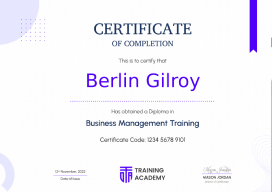
Once you’ve successfully completed your course, you will immediately be sent a digital certificate. Also, you can have your printed certificate delivered by post (shipping cost CA$9.99). All of our courses are fully accredited, providing you with up-to-date skills and knowledge and helping you to become more competent and effective in your chosen field.
Begin by exploring the fundamentals of food safety and its importance in protecting public health. This module introduces key food safety principles and the responsibilities of food handlers.
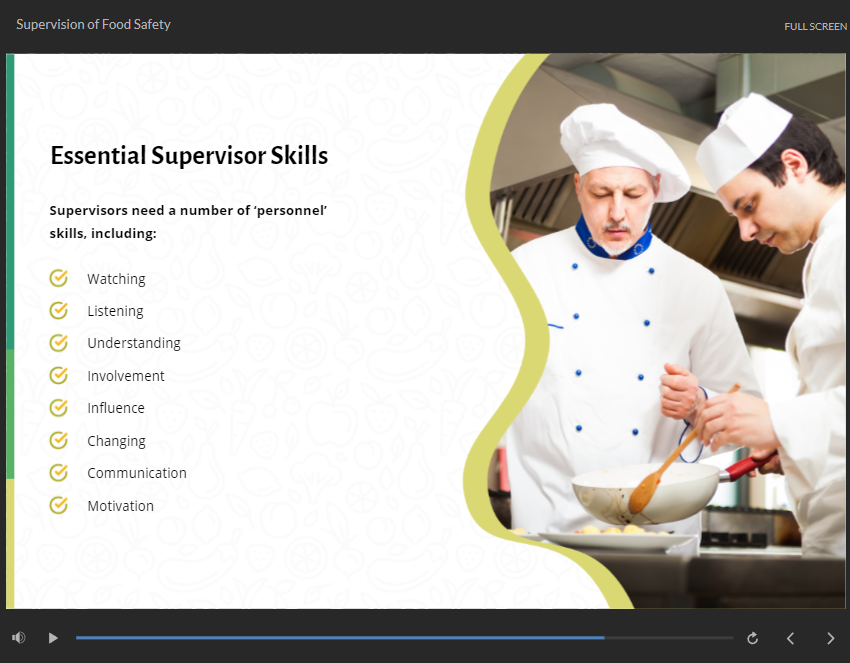
Learn how food safety procedures are monitored and maintained in professional kitchen environments. The module highlights the role of supervision in ensuring compliance and consistency.
Understand the regulations and legal requirements that govern food safety practices. Learners explore the responsibilities of food businesses and employees in maintaining safe food environments.
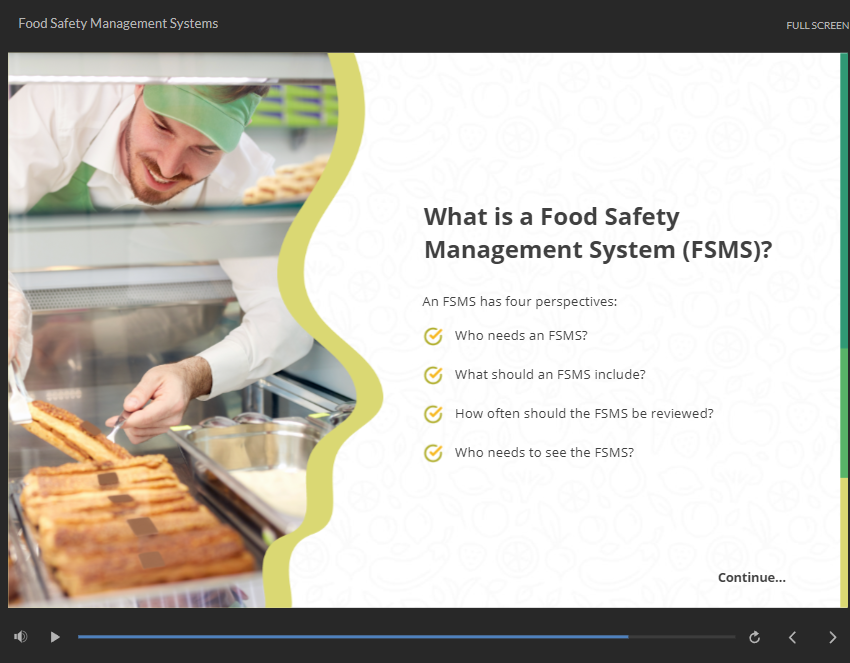
Discover how food safety management systems help organisations identify, control, and monitor food-related risks. This module introduces structured approaches to food safety planning.
Explore the tools and procedures used to support effective food safety management. Topics include monitoring methods, record-keeping practices, and safety controls.
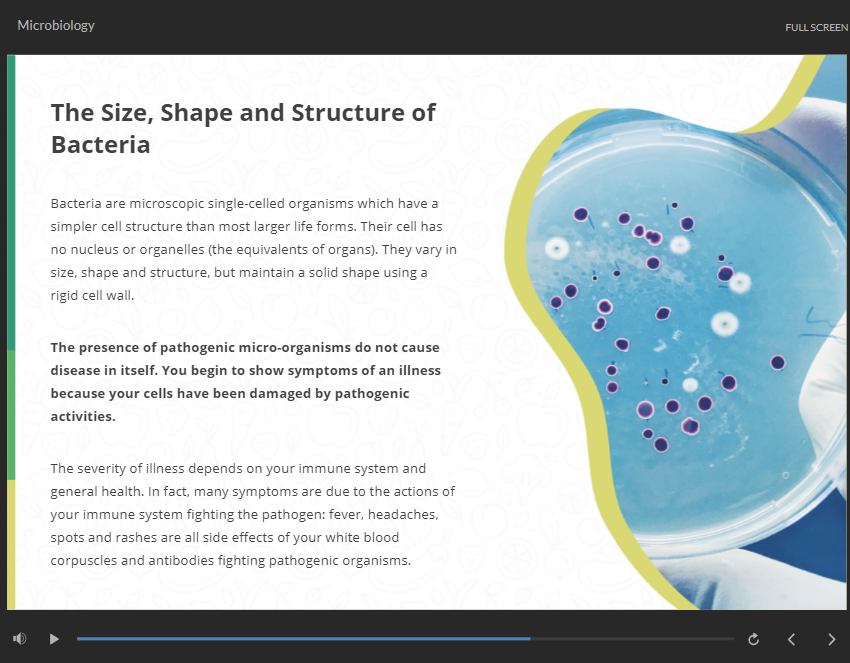
Gain insight into the microorganisms that can affect food safety. The module examines how bacteria, viruses, moulds, and other microbes impact food quality and public health.
Learn about the different types of food contamination, including biological, chemical, and physical hazards. The module focuses on identifying risks within food preparation areas.
Explore practical methods for preventing contamination during food handling, preparation, storage, and service. Learners discover how good practices contribute to safer food operations.
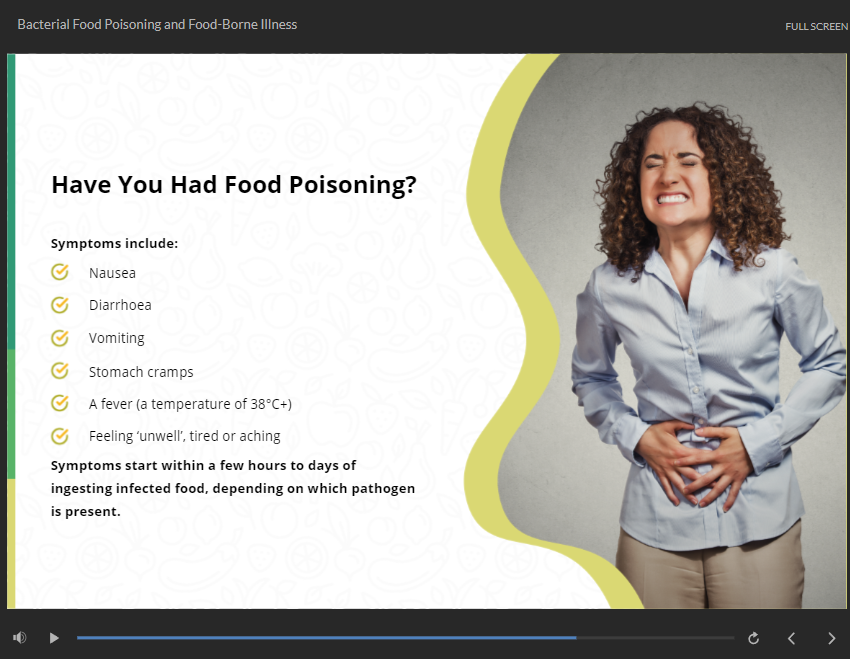
Understand common bacterial causes of food poisoning and the factors that contribute to foodborne illness outbreaks. The module highlights prevention and control measures.
Examine non-bacterial causes of food-related illness, including allergens, toxins, chemicals, and environmental contaminants that may affect food safety.
Personal hygiene is essential in food service environments. This module explores handwashing, protective clothing, personal cleanliness, and hygiene standards for food handlers.
Learn how temperature affects food safety and quality. The module covers safe cooking, cooling, reheating, storage temperatures, and temperature monitoring practices.
Accurate temperature records help maintain food safety standards. Learners examine methods for checking, verifying, and documenting temperature readings effectively.
Discover the factors that contribute to food spoilage and the methods used to extend shelf life. Topics include preservation techniques and food quality management.
Explore how kitchen design, layout, and equipment selection contribute to food safety. The module highlights the importance of maintaining suitable food preparation environments.
Learn effective cleaning, sanitising, and waste management procedures that help prevent contamination and maintain hygienic food service operations.
Understand the risks posed by pests in food environments and explore strategies used to prevent infestations and maintain food safety standards.
Examine the importance of staff training in maintaining food safety compliance. This module highlights communication, supervision, and continuous learning within food businesses.
Conclude the course by exploring health, hygiene, and operational considerations that support safe food service practices during public health challenges and changing workplace conditions.
Yes. Food safety and kitchen operation knowledge are valuable across Canada’s hospitality, healthcare, catering, education, and food service sectors.
The course covers contamination prevention, foodborne illnesses, personal hygiene, temperature control, food preservation, cleaning procedures, and food safety management.
No. This course is suitable for beginners and provides foundational knowledge for those entering the food service industry.
Food safety helps prevent contamination, foodborne illnesses, and health risks while ensuring compliance with food service standards and regulations.
Yes. The course provides knowledge that supports safe food handling, hygiene practices, and food safety compliance.
Yes. The course is designed for learners of all experience levels and offers a strong introduction to food safety and kitchen operations.
| Kitchen Assistant | |||
| Food Safety – Introduction | 00:30:00 | ||
| Supervision of Food Safety | 00:37:00 | ||
| Food Safety Legislation | 00:34:00 | ||
| Food Safety Management Systems | 00:44:00 | ||
| Food Safety Management Tools | 00:30:00 | ||
| Microbiology | 00:28:00 | ||
| Contamination Hazards | 00:28:00 | ||
| Controlling Contamination | 00:39:00 | ||
| Bacterial Food Poisoning and Food-Borne Illness | 00:32:00 | ||
| Non-bacterial Food Poisoning | 00:32:00 | ||
| Personal Hygiene | 00:30:00 | ||
| Food and Temperature Control | 00:34:00 | ||
| Checking, Verifying and Recording Temperature | 00:25:00 | ||
| Food Spoilage and Preservation | 00:38:00 | ||
| Food Premises and Equipment The Design and Construction | 00:35:00 | ||
| Waste Disposal, Cleaning and Disinfection | 00:35:00 | ||
| Pest Management | 00:29:00 | ||
| Food Safety Training for the Staff | 00:29:00 | ||
| Reopening and Adapting Your Food Business During COVID-19 | 00:11:00 | ||
| Mock Exam | |||
| Mock Exam – Kitchen Assistant | 00:20:00 | ||
| Final Exam | |||
| Final Exam – Kitchen Assistant | 00:20:00 | ||
$100 ex VAT
SAVE 0% - OFFER ENDS SOON
![]() |
01 Year of full Course access
Level 3
Endorsed Certificate of Compleiton