160 Students
Building wealth is not just about earning—it’s about making informed financial decisions that grow over time. This Investment course introduces the foundations of investing, financial markets, and portfolio planning, with a focus on real-world applications in Canada’s dynamic financial environment. Designed for beginners and individuals interested in personal finance or financial careers, the course explains how investment markets operate, how …
Building wealth is not just about earning—it’s about making informed financial decisions that grow over time. This Investment course introduces the foundations of investing, financial markets, and portfolio planning, with a focus on real-world applications in Canada’s dynamic financial environment.
Designed for beginners and individuals interested in personal finance or financial careers, the course explains how investment markets operate, how risks are managed, and how different asset classes work together. It is relevant for learners aiming to understand stock markets, bonds, and long-term wealth-building strategies used in Canada.
With flexible online learning, learners can study at their own pace while developing financial confidence. On completion, a certificate is awarded to support personal growth and career progression in finance-related fields. Start learning how investment decisions shape financial futures.
Please note: This Investment Course only gives you the theoretical knowledge that you need to excel in this field. This Course doesn’t entitle you to practise as a professional in this specific field.
By the end of the Investment Course, learners will be able to:
All of our courses, including this Investment Course, are fully accredited, providing you with up-to-date skills and knowledge and helping you to become more competent and effective in your chosen field.
All of our courses are accredited by the CPD Quality Standards as conforming to universally accepted Continuing Professional Development (CPD) guidelines.
The Quality Licence Scheme (QLS) is a trusted endorsement framework that certifies high-quality, non-regulated training programmes across various sectors.
The Association of Healthcare Trainers (AoHT) promotes high-quality healthcare training, supporting providers to deliver relevant, industry-aligned education and improve professional standards.
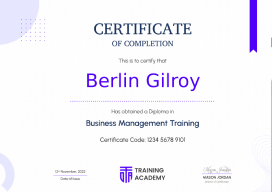
Once you’ve successfully completed your course, you will immediately be sent a digital certificate. Also, you can have your printed certificate delivered by post (shipping cost CA$9.99). All of our courses are fully accredited, providing you with up-to-date skills and knowledge and helping you to become more competent and effective in your chosen field.
The detailed curriculum outline of our Investment Course is as follows:
The journey begins with the fundamentals of investing, explaining what investment means and why individuals and organisations allocate money into financial markets for future growth and stability.
This area explores different investment options such as equities, bonds, and funds, along with common strategies used to build returns over time depending on financial goals and risk tolerance.
Core financial ideas such as return, risk, liquidity, and diversification are explained in simple terms, helping learners understand how investment decisions are evaluated in real situations.
This section builds a broader understanding of how financial systems work, including how money flows through markets, institutions, and economic environments.
Learners explore how bonds function, how governments and companies raise funds, and how fixed-income investments provide stability within a portfolio.
This module explains how stock markets operate, how shares are bought and sold, and how investors participate in company ownership and potential growth.
The final section focuses on balancing risk and return through portfolio management, showing how diversified investments help reduce financial exposure and improve long-term stability.
The most common types of investments in Canada include stocks, bonds, mutual funds, exchange-traded funds (ETFs), and real estate investment options. Each carries different levels of risk and return.
Yes, stock market investing carries risk because prices can fluctuate based on market conditions. However, risk can be managed through diversification, long-term planning, and research.
Stocks represent ownership in a company and may offer higher returns with higher risk, while bonds are loans to governments or companies that typically provide fixed interest income with lower risk.
Yes. Investment basics such as risk, return, diversification, and market types are beginner-friendly and can be learned with structured training and practice.
No. Many investors in Canada start without a finance background. Basic knowledge of financial markets and investment principles is enough to begin learning.
Portfolio management is the process of selecting and managing a mix of investments to balance risk and return based on financial goals.
| Module 01: Introduction to Investment | |||
| Introduction to Investment | 00:14:00 | ||
| Module 02: Types and Techniques of Investment | |||
| Types and Techniques of Investment | 00:20:00 | ||
| Module 03: Key Concepts in Investment | |||
| Key Concepts in Investment | 00:17:00 | ||
| Module 04: Understanding the Finance | |||
| Understanding the Finance | 00:14:00 | ||
| Module 05: Investing in Bond Market | |||
| Investing in Bond Market | 00:14:00 | ||
| Module 06: Investing in Stock Market | |||
| Investing in Stock Market | 00:17:00 | ||
| Module 07: Risk and Portfolio Management | |||
| Risk and Portfolio Management | 00:16:00 | ||
| Assignment | |||
| Assignment – Investment | 02:00:00 | ||
$125 Original price was: $125.$20Current price is: $20. ex VAT
SAVE 84% - OFFER ENDS SOON
![]() |
01 Year of full Course access
Intermediate
Endorsed Certificate of Compleiton