0
Take your career to the next level with our Level 3 Certificate in Assessing Vocational Achievement (RQF)! This comprehensive course equips you with the essential skills and knowledge to become a confident and competent vocational assessor. Master the art of assessment and position yourself as a valued professional in your field. This qualification offers a unique blend of theoretical understanding …
Take your career to the next level with our Level 3 Certificate in Assessing Vocational Achievement (RQF)! This comprehensive course equips you with the essential skills and knowledge to become a confident and competent vocational assessor. Master the art of assessment and position yourself as a valued professional in your field.
This qualification offers a unique blend of theoretical understanding and practical application, designed for individuals who wish to advance their careers in vocational assessment. You’ll gain a solid grasp of key assessment principles, methods, and best practices, along with the ability to evaluate occupational competence in real workplace environments. Learners will also develop expertise in assessing vocational skills, knowledge, and understanding—ensuring you’re fully prepared to excel as a professional assessor.
Whether you’re new to the field or looking to enhance your current skills, this course provides the foundation and flexibility you need to achieve your goals. Study at your own pace with accessible online learning materials and fast-track your progress toward becoming a recognised and in-demand vocational assessor.
Through this course, you will:
1. Understand the key standards and guidelines for assessment
2. Explore a range of assessment methods and learn to manage information effectively
3. Make sound, evidence-based assessment decisions and maintain quality assurance
4. Adhere to legal and ethical requirements when assessing occupational competence
5. Plan, prepare, and carry out effective vocational evaluations
6. Assess knowledge, skills, and understanding in various learning and workplace contexts
After achieving the Level 3 Certificate in Assessing Vocational Achievement (RQF), you can pursue roles such as:
1. Vocational Assessor
2. Professional Trainer
3. Coach or Mentor
4. Professional Verifier
Learners must complete three mandatory units, achieving a total of 15 credits to earn the qualification.
The aim of this qualification is to confirm your competence as a professional assessor according to industry standards. It provides a deep understanding of how to assess occupational competence both within the workplace and in external learning environments.
1. Total Qualification Time: 234 hours
2. Credit Value: 15 credits (1 credit = 10 learning hours)
TQT includes all study time, preparation, and assessment activities, whether supervised or self-directed.
1. Guided Learning Hours: 84 hours
These hours cover all contact time, guidance, and supervision provided by tutors, trainers, or mentors.
This qualification is ideal for:
1. Individuals aspiring to become qualified assessors in education or training
2. Professionals seeking to obtain a recognised assessor certification
3. Experienced vocational practitioners aiming to strengthen their assessment expertise
4. Those familiar with vocational environments who want to advance their knowledge and career prospects
There are no formal entry requirements for this course. It is open to learners aged 19 and above.
Upon completion, learners can progress to higher-level qualifications, such as:
1. Focus Awards Level 3 Award in Assessing Competence in the Work Environment
2. Focus Awards Level 4 Award in Understanding the Internal Quality Assurance of Assessment Processes and Practices
3. Focus Awards Level 4 Certificate in Leading the Internal Quality Assurance of Assessment Processes and Practices
The qualification is internally assessed. Learners must compile a portfolio of evidence demonstrating achievement of all learning outcomes and assessment criteria for each unit.
Evidence may include:
1. Assessor observations and action plans
2. Witness testimonies
3. Learner-produced work
4. Worksheets, assignments, projects, and reports
5. Records of oral and written questioning
6. Peer or self-assessment reports
7. Recognition of Prior Learning (RPL)
Evidence can be drawn from both real and simulated workplace situations, where permitted by relevant Sector Skills Councils or Bodies.
Focus Awards Level 4 Certificate in Education and Training (RQF)
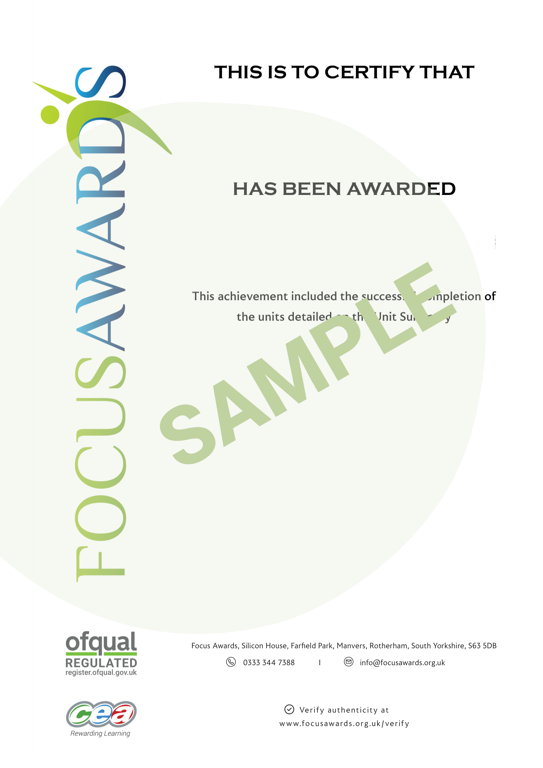
Once you’ve successfully completed your course, you will immediately be sent a digital certificate. Also, you can have your printed certificate delivered by post (shipping cost £3.99). All of our courses are fully accredited, providing you with up-to-date skills and knowledge and helping you to become more competent and effective in your chosen field. Our certifications have no expiry dates, although we do recommend that you renew them every 12 months.
Online Training Academy is an approved affiliate of Training Express. Under this partnership, the qualification will be delivered and assessed by Training Express.
1. Functions of Assessment in Learning and Development
2. Key Concepts and Principles of Assessment
3. Responsibilities of an Assessor
4. Regulations and Requirements Relevant to the Assessment
1. Strengths and Limitations of Various Assessment Methods
1. Key Factors to Consider When Planning Assessment
2. Benefits of Using A Holistic Approach to Assessment
3. How to Plan A Holistic Approach to Assessment
4. Types of Risks Involved in Assessment
5. How to Minimise Risks Through the Planning Process
1. Importance of Involving Learner and Others in The Assessment Process
2. Information That Should Be Made Available to Learners and Others
3. How to Use Peer and Self-Assessment Effectively
4. Assessment Arrangements to Meet the Needs of Individual Learners
1. Assessment Decisions and Judging Evidence
1. Importance of Quality Assurance in The Assessment Process
2. Quality Assurance and Standardisation Procedures
3. Appeals, Complaints & Disputes Procedures Concerning Assessment in Own Area of Practice
1. Importance of Following Procedures for The Management of Information Relating to Assessment
2. How Feedback and Questioning Contribute to the Assessment Process
1. Legal Issues, Policies and Procedures Relevant to Assessment
2. Contribution of Technology in the Assessment Process
3. Evaluation of Requirements for Equality, Diversity
4. Reflective Practice and Continual Professional Development
1. Assessment Planning of Occupational Competence
2. Communicating the Process of Assessing Occupational Competence to The Learner
3. Planning the Assessment of Occupational Competence to Address Learner Needs and Current Achievements
4. Opportunities for Holistic Assessment
1. Valid, Fair and Reliable Assessment Method
2. Making Assessment Decisions of Occupational Competence
3. Following Standardisation Procedures
4. Providing Feedback to Learners
1. Maintaining Records of the Related Information of the Assessment of Occupational Competence
2. Sharing Assessment Information with Authorised Colleagues and Procedures to Maintain the Confidentiality
1. Relevant Policies, Procedures and Legislation for the Assessment of Occupational Competence
2. Application of Requirements for Equality and Diversity and Bilingualism in Assessing Occupational Competence
3. Evaluation of Own Work in Carrying Out Assessments
4. Maintaining the Currency of Own Expertise and Competence
1. Methods of Assessing Vocational Skills, Knowledge and Understanding to Meet Requirements and Needs
2. Preparing Resources and Conditions for The Assessment
3. Communicating the Purpose, Requirements and Processes of Assessment to Learners
1. Assessment Management to Meet Assessment Requirements
2. Providing Support to Learners Within Agreed Limitations
3. Analysing Evidence of Learner Achievement
4. Making Assessment Decisions Related to Vocational Skills, Knowledge and Understanding
5. Standardisation Procedures
6. Feedback on Learners’ Achievement
1. Maintaining Records of Assessment, Its Outcome and Learners Progress
2. Making Assessment Information Available to Authorised Colleagues as Required and Maintaining Confidentiality
1. Relevant Policies, Procedures and Legislation Relating to The Assessment of Vocational Skills, Knowledge and Understanding
2. Applying Requirements for Equality and Diversity and Bilingualism
3. Evaluation and CPD
| Induction Form | |||
| Registration Entry Form | |||
| Guidance for Achieving the Units | |||
| Unit 1 Understanding The Principles And Practices Of Assessment Guidance For Achieving The Unit | 00:00:00 | ||
| Unit 2 Assess Occupational Competence In The Work Environment Guidance For Achieving The Unit | 00:00:00 | ||
| Unit 3 Assess Vocational Skills, Knowledge And Understanding Guidance For Achieving The Unit | 00:00:00 | ||
| Assessment Guidelines | 00:00:00 | ||
| Support Materials | |||
| Unit 01 : Understanding the Principles and Practices of Assessment | |||
| LO1: Understand the Principles and Requirements of Assessment | |||
| 1. Functions of Assessment in Learning and Development | 00:00:00 | ||
| 2. Key Concepts and Principles of Assessment | 00:00:00 | ||
| 3. Responsibilities of an Assessor | 00:00:00 | ||
| 4. Regulations and Requirements Relevant to the Assessment | 00:00:00 | ||
| LO2: Understand Different Types of Assessment Method | |||
| 1. Strengths and Limitations of Various Assessment Methods | 00:00:00 | ||
| LO3: Understand How to Plan Assessment | |||
| 1. Key Factors to Consider When Planning Assessment | 00:00:00 | ||
| 2. Benefits of Using A Holistic Approach to Assessment | 00:00:00 | ||
| 3. How to Plan A Holistic Approach to Assessment | 00:00:00 | ||
| 4. Types of Risks Involved in Assessment | 00:00:00 | ||
| 5. How to Minimise Risks Through the Planning Process | 00:00:00 | ||
| LO4: Understand How to Involve Learners and Others in Assessment | |||
| 1. Importance of Involving Learner and Others in The Assessment Process | 00:00:00 | ||
| 2. Information That Should Be Made Available to Learners and Others | 00:00:00 | ||
| 3. How to Use Peer and Self-Assessment Effectively | 00:00:00 | ||
| 4. Assessment Arrangements to Meet the Needs of Individual Learners | 00:00:00 | ||
| LO5: Understand How to Make Assessment Decisions | |||
| 1. Assessment Decisions and Judging Evidence | 00:00:00 | ||
| LO6: Understand Quality Assurance of the Assessment Process | |||
| 1. Importance of Quality Assurance in The Assessment Process | 00:00:00 | ||
| 2. Quality Assurance and Standardisation Procedures | 00:00:00 | ||
| 3. Appeals, Complaints & Disputes Procedures Concerning Assessment in Own Area of Practice | 00:00:00 | ||
| LO7: Understand How to Manage Information Relating to Assessment | |||
| 1. Importance of Following Procedures for The Management of Information Relating to Assessment | 00:00:00 | ||
| 2. How Feedback and Questioning Contribute to the Assessment Process | 00:00:00 | ||
| LO8: Understand the Legal and Good Practice Requirements in Relation to Assessment | |||
| 1. Legal Issues, Policies and Procedures Relevant to Assessment | 00:00:00 | ||
| 2. Contribution of Technology in the Assessment Process | 00:00:00 | ||
| 3. Evaluation of Requirements for Equality, Diversity | 00:00:00 | ||
| 4. Reflective Practice and Continual Professional Development | 00:00:00 | ||
| Unit 02 : Assess Occupational Competence in the Work Environment | |||
| LO1: Be Able to Plan the Assessment of Occupational Competence | |||
| 1. Assessment Planning of Occupational Competence | 00:00:00 | ||
| 2. Communicating the Process of Assessing Occupational Competence to The Learner | 00:00:00 | ||
| 3. Planning the Assessment of Occupational Competence to Address Learner Needs and Current Achievements | 00:00:00 | ||
| 4. Opportunities for Holistic Assessment | 00:00:00 | ||
| LO2: Be Able to Make Assessment Decisions About Occupational Competence | |||
| 1. Valid, Fair and Reliable Assessment Method | 00:00:00 | ||
| 2. Making Assessment Decisions of Occupational Competence | 00:00:00 | ||
| 3. Following Standardisation Procedures | 00:00:00 | ||
| 4. Providing Feedback to Learners | 00:00:00 | ||
| LO3: Be Able to Provide Required Information Following the Assessment of Occupational Competence | |||
| 1. Maintaining Records of the Related Information of the Assessment of Occupational Competence | 00:00:00 | ||
| 2. Sharing Assessment Information with Authorised Colleagues and Procedures to Maintain the Confidentiality | 00:00:00 | ||
| LO4: Be Able to Maintain Legal and Good Practice Requirements When Assessing Occupational Competence | |||
| 1. Relevant Policies, Procedures and Legislation for the Assessment of Occupational Competence | 00:00:00 | ||
| 2. Application of Requirements for Equality and Diversity and Bilingualism in Assessing Occupational Competence | 00:00:00 | ||
| 3. Evaluation of Own Work in Carrying Out Assessments | 00:00:00 | ||
| 4. Maintaining the Currency of Own Expertise and Competence | 00:00:00 | ||
| Unit 03 : Assess Vocational Skills, Knowledge and Understanding | |||
| LO1: Be Able to Prepare Assessments of Vocational Skills, Knowledge and Understanding | |||
| 1. Methods of Assessing Vocational Skills, Knowledge and Understanding to Meet Requirements and Needs | 00:00:00 | ||
| 2. Preparing Resources and Conditions for The Assessment | 00:00:00 | ||
| 3. Communicating the Purpose, Requirements and Processes of Assessment to Learners | 00:00:00 | ||
| LO2: Be Able to Carry Out Assessments of Vocational Skills, Knowledge and Understanding | |||
| 1. Assessment Management to Meet Assessment Requirements | 00:00:00 | ||
| 2. Providing Support to Learners Within Agreed Limitations | 00:00:00 | ||
| 3. Analysing Evidence of Learner Achievement | 00:00:00 | ||
| 4. Making Assessment Decisions Related to Vocational Skills, Knowledge and Understanding | 00:00:00 | ||
| 5. Standardisation Procedures | 00:00:00 | ||
| 6. Feedback on Learners’ Achievement | 00:00:00 | ||
| LO3: Be Able to Provide Required Information Following the Assessment of Vocational Skills, Knowledge and Understanding | |||
| 1. Maintaining Records of Assessment, Its Outcome and Learners Progress | 00:00:00 | ||
| 2. Making Assessment Information Available to Authorised Colleagues as Required and Maintaining Confidentiality | 00:00:00 | ||
| LO4: Be Able to Maintain Legal and Good Practice Requirements When Assessing Vocational Skills, Knowledge and Understanding | |||
| 1. Relevant Policies, Procedures and Legislation Relating to The Assessment of Vocational Skills, Knowledge and Understanding | 00:00:00 | ||
| 2. Applying Requirements for Equality and Diversity and Bilingualism | 00:00:00 | ||
| 3. Evaluation and CPD | 00:00:00 | ||
| Handouts | |||
| Equality and Diversity – Glossary of Terms | 00:00:00 | ||
| Equality and Diversity, and The Equality Act 2010 | 00:00:00 | ||
| Key Feedback Words for Use During Feedback | 00:00:00 | ||
| Table of Assessment Methods & Activities: Strengths and Limitations | 00:00:00 | ||
| Table of Assessment Types | 00:00:00 | ||
| Table of Example Assessment Records | 00:00:00 | ||
| Table of Example Assessment Requirements | 00:00:00 | ||
| Table of Objectives | 00:00:00 | ||
| Table of Potential Learner Needs and Points of Referral | 00:00:00 | ||
| Table of Resources Which Could be Used for Teaching, Learning and Assessment | 00:00:00 | ||
| Using Questions | 00:00:00 | ||
| Self-Assessment | |||
| Unit One Understanding The Principles And Practices Of Assessment – Self-Assessment Grid | 00:00:00 | ||
| Unit Two Assess Occupational Competence In The Work Environment – Self-Assessment Grid | 00:00:00 | ||
| Unit Three Assess Vocational Skills, Knowledge And Understanding – Self-Assessment Grid | 00:00:00 | ||
| Assessment Plan | |||
| Unit 1 Understanding The Principles And Practices Of Assessment Assessment Plan | 00:00:00 | ||
| Unit 2 Assess Occupational Competence In The Work Environment Assessment Plan | 00:00:00 | ||
| Unit 3 Assess Vocational Skills, Knowledge And Understanding Assessment Plan | 00:00:00 | ||
| Observation Checklist - For Assessors of The Assessment Units | |||
| OBSERV 1 | 00:00:00 | ||
| OBSERV 2 | 00:00:00 | ||
| Templates and Completed Examples | |||
| Templates | |||
| Template – Continuing Professional Development Record | 00:00:00 | ||
| Template – Personal Development Plan | 00:00:00 | ||
| Template – Reflective Learning Journal | 00:00:00 | ||
| Template – Standardisation Record for Assessed Work | 00:00:00 | ||
| Templates – A Full Set of Assessment Records | 00:00:00 | ||
| Completed Examples | |||
| Completed Example of A Continuing Professional Development Record | 00:00:00 | ||
| Completed Example of A Full Set Of Assessment Records | 00:00:00 | ||
| Completed Example of A Personal Development Plan | 00:00:00 | ||
| Completed Example of A Reflective Learning Journal | 00:00:00 | ||
| Completed Example of A Standardisation Record For Assessed Work | 00:00:00 | ||
$1,873 Original price was: $1,873.$1,310Current price is: $1,310. ex VAT
SAVE 31% - OFFER ENDS SOON
![]() |


Behaviour Based Safety for Train the Trainer teach you everything on the topic thoroughly from scratch so you can achieve a professional certificate for free to showcase your achievement in professional life. This Behaviour Based Safety for Train the Trainer is a comprehensive, instructor-guided course, designed to provide a detailed understanding of the nature of the related sector and your …
Indian Culinary Techniques teach you everything on the topic thoroughly from scratch so you can achieve a professional certificate for free to showcase your achievement in professional life. This Indian Culinary Techniques is a comprehensive, instructor-guided course, designed to provide a detailed understanding of the nature of the related sector and your key roles within it. To become successful in …

Health and Safety in Veterinary Services teach you everything on the topic thoroughly from scratch so you can achieve a professional certificate for free to showcase your achievement in professional life. This Health and Safety in Veterinary Services is a comprehensive, instructor-guided course, designed to provide a detailed understanding of the nature of the related sector and your key roles …
Veterinary Technician teach you everything on the topic thoroughly from scratch so you can achieve a professional certificate for free to showcase your achievement in professional life. This Veterinary Technician is a comprehensive, instructor-guided course, designed to provide a detailed understanding of the nature of the related sector and your key roles within it. To become successful in your profession, …