572 Students
DSEAR Training – Level 3 develops advanced knowledge of dangerous substances, explosive atmospheres, workplace risk assessment, and safety controls. Learners examine regulatory responsibilities, technical risk assessment, engineering controls, emergency response, safety leadership, and documentation. The course is suitable for health and safety staff, managers, supervisors, engineers, compliance personnel, and others involved in hazardous workplace environments in Canada. Canadian workplaces may …
DSEAR Training – Level 3 develops advanced knowledge of dangerous substances, explosive atmospheres, workplace risk assessment, and safety controls. Learners examine regulatory responsibilities, technical risk assessment, engineering controls, emergency response, safety leadership, and documentation. The course is suitable for health and safety staff, managers, supervisors, engineers, compliance personnel, and others involved in hazardous workplace environments in Canada. Canadian workplaces may manage similar risks through federal or provincial occupational health and safety requirements, depending on the workplace and jurisdiction.
The training helps learners assess risks linked to flammable gases, vapours, liquids, and combustible dusts, while reviewing measures that can reduce fire and explosion hazards. It can support career development across manufacturing, energy, chemical processing, laboratories, warehousing, and other safety-focused sectors.
Online, self-paced learning gives learners flexibility to study around work and other commitments. Structured materials and certification on completion provide a convenient way to strengthen workplace safety knowledge.
The course builds advanced awareness of how dangerous substances can create fire, explosion, and related workplace risks. Learners develop knowledge that can support safer risk management and decision-making.
The training is suited to people whose roles involve workplace safety, hazardous materials, risk assessment, or operational oversight.
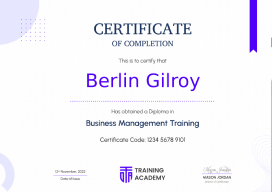
Once you’ve successfully completed your course, you will immediately be sent a digital certificate. Also, you can have your printed certificate delivered by post (shipping cost £3.99). All of our courses are fully accredited, providing you with up-to-date skills and knowledge and helping you to become more competent and effective in your chosen field. Our certifications have no expiry dates, although we do recommend that you renew them every 12 months.
Understanding dangerous substance risks can be valuable in workplaces where chemicals, gases, vapours, or combustible dusts are present. Canadian occupational health and safety requirements also place responsibilities on workplaces to control hazardous conditions.
Salary ranges vary by province, experience, industry, employer, and level of responsibility.
The course is designed to be accessible to learners who want to strengthen their knowledge of dangerous substance and workplace safety risks.
All of our courses, including this DSEAR Training Level 3, are fully accredited, providing you with up-to-date skills and knowledge and helping you to become more competent and effective in your chosen field.
All of our courses are accredited by the CPD Quality Standards as conforming to universally accepted Continuing Professional Development (CPD) guidelines.
The Quality Licence Scheme (QLS) is a trusted endorsement framework that certifies high-quality, non-regulated training programmes across various sectors.
The Association of Healthcare Trainers (AoHT) promotes high-quality healthcare training, supporting providers to deliver relevant, industry-aligned education and improve professional standards.
The detailed curriculum outline of our DSEAR Training Level 3 is as follows:
A strong understanding of workplace responsibilities provides the foundation for managing dangerous substance risks. Learners explore legal duties, enforcement, guidance, and ways organisations can demonstrate compliance through audits and records.
Risk assessment requires more than simply listing hazardous substances. This module looks at quantitative assessment methods, modelling tools, fire and explosion analysis, and the preparation of clear assessment reports.
Engineering controls can reduce the chance of dangerous substances creating an explosive atmosphere or reaching an ignition source. Learners examine containment, venting, inerting, monitoring systems, and suitable equipment.
When an incident occurs, clear responsibilities and well-planned procedures matter. The content covers spill response, emergency coordination, post-incident recovery, and reviewing events to identify improvements.
Safety management depends on more than equipment and procedures. Learners consider staff training, accountability, behavioural safety, continuous improvement, and effective communication with contractors and external partners.
Accurate documentation helps organisations demonstrate how risks have been assessed and controlled. Learners develop knowledge of audit evidence, reporting records, document control, review cycles, and integration with wider workplace safety systems.
DSEAR stands for Dangerous Substances and Explosive Atmospheres Regulations. The term refers specifically to UK regulations, so Canadian learners should understand that DSEAR itself is not Canadian legislation. Similar workplace hazards in Canada are managed under applicable federal, provincial, or territorial occupational health and safety requirements.
Dangerous substances can include flammable liquids, gases, vapours, pressurised gases, and combustible dusts that may create fire or explosion risks. In Canada, hazardous workplace products are also communicated through systems such as WHMIS, including labels and Safety Data Sheets (SDSs).
A risk assessment helps identify the substances and activities that could create harm, determine who may be exposed, and decide which controls are needed. Canadian workplace guidance similarly emphasises identifying hazardous substances and assessing workplace risks before selecting appropriate controls.
The course covers advanced risk assessment, regulatory responsibilities, engineering controls, explosion prevention, emergency response, safety leadership, contractor management, auditing, and documentation. It also considers modelling, monitoring systems, ignition-source control, and post-incident review.
It can be relevant to health and safety personnel, managers, supervisors, engineers, compliance teams, and workers involved with hazardous substances or explosion risks. The knowledge may be particularly useful in sectors such as manufacturing, chemical processing, energy, laboratories, and storage.
Not by itself. DSEAR is a UK regulatory framework, while Canadian workplaces must follow the applicable federal, provincial, or territorial requirements. In Canada, WHMIS provides a national hazard-communication framework, while occupational health and safety responsibilities vary by jurisdiction. This course should therefore be viewed as advanced safety education rather than a substitute for required Canadian regulatory training.
| Introduction | |||
| Introduction | 00:01:00 | ||
| Module 1: Regulatory Deep Dive | |||
| 1.1 Regulatory Deep Dive | 00:01:00 | ||
| 1.1.1. Legal Definitions Employers, Employees, Duty Holders | 00:01:00 | ||
| 1.1.2. Regulatory Enforcement and Penalties | 00:01:00 | ||
| 1.1.3. HSE Guidance and Approved Codes of Practice | 00:01:00 | ||
| 1.1.4. Auditing for Legal Compliance | 00:01:00 | ||
| Reading Materials | |||
| Regulatory Deep Dive | 00:00:00 | ||
| Module 2: Technical Risk Assessment | |||
| 2.1 Technical Risk Assessment | 00:01:00 | ||
| 2.1.1. Quantitative Risk Assessment Techniques | 00:05:00 | ||
| 2.1.2. Use of Modelling and Simulation Tools | 00:01:00 | ||
| 2.1.3. Integration with Fire and Explosion Risk Analysis | 00:01:00 | ||
| 2.1.4. Writing and Reviewing Assessment Reports | 00:01:00 | ||
| Reading Materials | |||
| Technical Risk Assessment | 00:00:00 | ||
| Module 3: Engineering Controls and System Design | |||
| 3.1 Engineering Controls and System Design | 00:00:00 | ||
| 3.1.1. Containment, Venting, and Inerting Systems | 00:01:00 | ||
| 3.1.2. Control of Ignition Sources | 00:01:00 | ||
| 3.1.3. Design and Maintenance of Explosion-Proof Equipment | 00:01:00 | ||
| 3.1.4. Monitoring Systems and Automation | 00:04:00 | ||
| Reading Materials | |||
| Engineering Controls and System Design | 00:00:00 | ||
| Module 4: Emergency Preparedness and Incident Response | |||
| 4.1 Emergency Preparedness and Incident Response | 00:01:00 | ||
| 4.1.1. Spill Response and Firefighting Approaches | 00:01:00 | ||
| 4.1.2. Roles in Emergency Coordination | 00:01:00 | ||
| 4.1.3. Post-Incident Recovery and Evaluation | 00:01:00 | ||
| 4.1.4. Learning from Major UK Incidents | 00:01:00 | ||
| Reading Materials | |||
| Emergency Preparedness and Incident Response | 00:00:00 | ||
| Module 5: Organisational Culture and Safety Leadership | |||
| 5.1 Organisational Culture and Safety Leadership | 00:01:00 | ||
| 5.1.1. Developing Internal Training Frameworks | 00:01:00 | ||
| 5.1.2. Behavioural Safety and Accountability Models | 00:05:00 | ||
| 5.1.3. Continuous Improvement and Feedback Systems | 00:01:00 | ||
| 5.1.4. Engaging Contractors and External Partners | 00:01:00 | ||
| Reading Materials | |||
| Organisational Culture and Safety Leadership | 00:00:00 | ||
| Module 6: Documentation and Evidence Management | |||
| 6.1 Documentation and Evidence Management | 00:01:00 | ||
| 6.1.1 Evidence Collection for External Audits | 00:01:00 | ||
| 6.1.2 Reporting Requirements and Paper Trails | 00:01:00 | ||
| 6.1.3 Version Control and Review Cycles | 00:01:00 | ||
| 6.1.4 Integration with Broader Health and Safety Systems | 00:01:00 | ||
| Reading Materials | |||
| Documentation and Evidence Management | 00:00:00 | ||
| Conclusion | |||
| Conclusion | 00:01:00 | ||
$125 Original price was: $125.$20Current price is: $20. ex VAT
SAVE 84% - OFFER ENDS SOON
![]() |
01 Year of full Course access
Level 3
Endorsed Certificate of Compleiton