1 Students
Food safety is the backbone of every successful catering business. The Diploma in Supervising Food Safety in Catering Level 3 equips you with the essential knowledge and leadership skills to manage, monitor, and maintain high food safety standards in any catering environment. Through this course, you will learn to identify contamination risks, supervise staff effectively, and comply with food safety …
Food safety is the backbone of every successful catering business. The Diploma in Supervising Food Safety in Catering Level 3 equips you with the essential knowledge and leadership skills to manage, monitor, and maintain high food safety standards in any catering environment.
Through this course, you will learn to identify contamination risks, supervise staff effectively, and comply with food safety legislation and best practices. Graduates are well-prepared for supervisory or management positions in the catering and hospitality industry.
In the UK, Food Safety Supervisors and Catering Managers typically earn around £13–£18 per hour, with an average annual salary of £28,000–£37,000, depending on experience and workplace size.
This course begins with Module 1: Food Safety – An Introduction, which explains the importance of food hygiene and safety. Module 2 explores the Supervision of Food Safety, helping learners understand how to monitor and support team compliance. Module 3 covers Food Safety Legislation, detailing key UK laws and regulations. In Module 4, students discover how to establish a Food Safety Management System, followed by Module 5, which introduces essential Food Safety Management Tools.
Module 6 to 10 focus on Microbiology, Contamination Hazards, and Food Poisoning (Bacterial and Non-Bacterial)—critical topics for understanding foodborne illnesses. Modules 11 to 14 explore Personal Hygiene, Temperature Control, Recording Temperatures, and Food Preservation. Finally, Modules 15 to 19 cover Premises Design, Waste Disposal, Pest Management, Staff Training, and Reopening Procedures during COVID-19, ensuring a comprehensive understanding of food safety supervision.
This introductory module will draw your attention to the world of food safety. You’ll learn about the food-borne illnesses and its causes, the vulnerable risk groups, and the key terms which will help you to understand food safety and its importance.
Accordion Cont
This module will tell you everything that you need to know about the roles and responsibilities of a supervisor. Along with the in-depth knowledge of supervisory skills and styles, you’ll also learn about food safety cultures, standards, food safety policies, and quality assurance & control.
ent
As the name suggests, this particular module is dedicated to giving you an overview of the key legislation, concerning authorities to enforce the law, code of practices, fines and prosecution, and due diligence.
Accordio
The food safety management system, HACCP and its fundamental principles, detail discussion of the implementation of HACCP, and HACCP based food safety management system – these are the keynotes of this module 4.
n Content
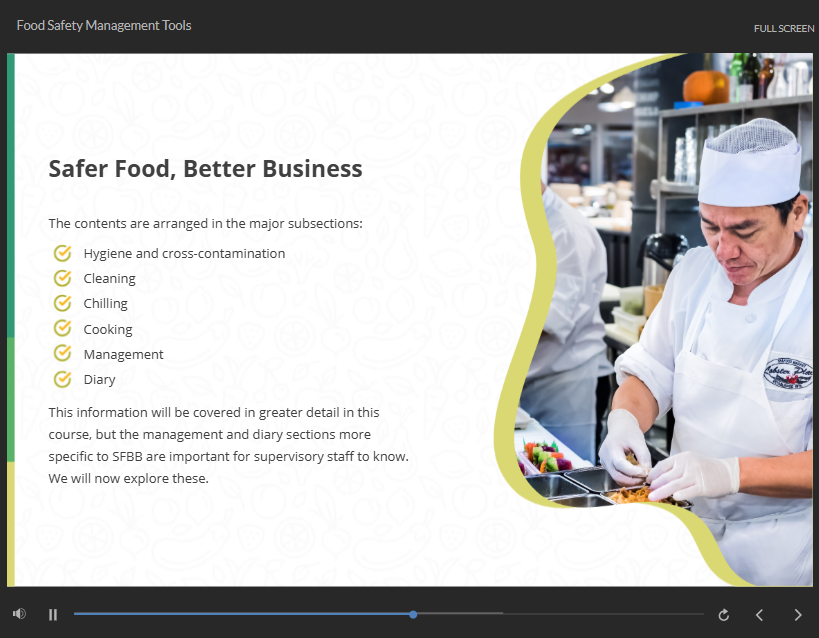
The highlighted part of module 5 is a vivid discussion on the various food safety management tools. Along with this, learners will also get to know about the management responsibilities and the importance of documenting the food safety system.
In module 6, we’ll give you a tour of Microbiology. In this voyage, you will come across the detail of bacteria and factors responsible for its multiplication, moulds, yeasts, viruses, protozoa, and cyclospora.
From knowing the sources of contamination to understand the processes of detecting contamination – all will be discussed in module 7. You’ll also learn about various types of contamination hazards, vehicles of contamination, and cross-contamination.
This module will shed light on the control of different contamination hazards and the role of the supervisor in the prevention of contamination. Food storage, food preparation and cooking, and food service and delivery are some of the other key topics of this eighth module.
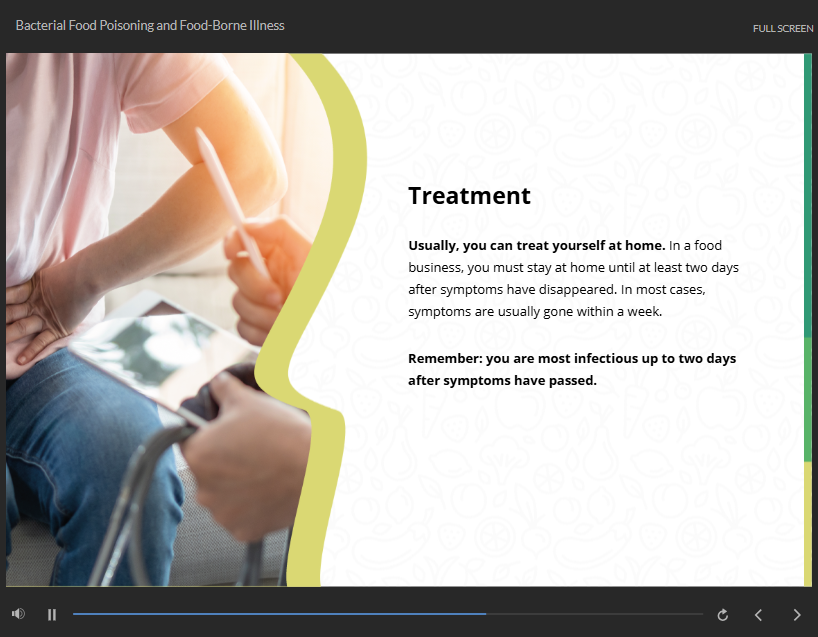
After a brief discussion on food poisoning, this module will draw your attention to the most common causes of food poisoning, food-borne illness, and food-borne viruses. Each of the topics will be discussed in detail.
In this module; you will learn about chemical food poisoning, metallic food poisoning, scombrotoxic fish poisoning, paralytic shellfish poisoning and diarrhetic shellfish poisoning, and the generic control measures for most food poisoning organisms.
This module will tell you about the high standards of personal hygiene, the relevant law and the role of the supervisor in personal hygiene. You’ll also learn about the hazards that come from food handlers.
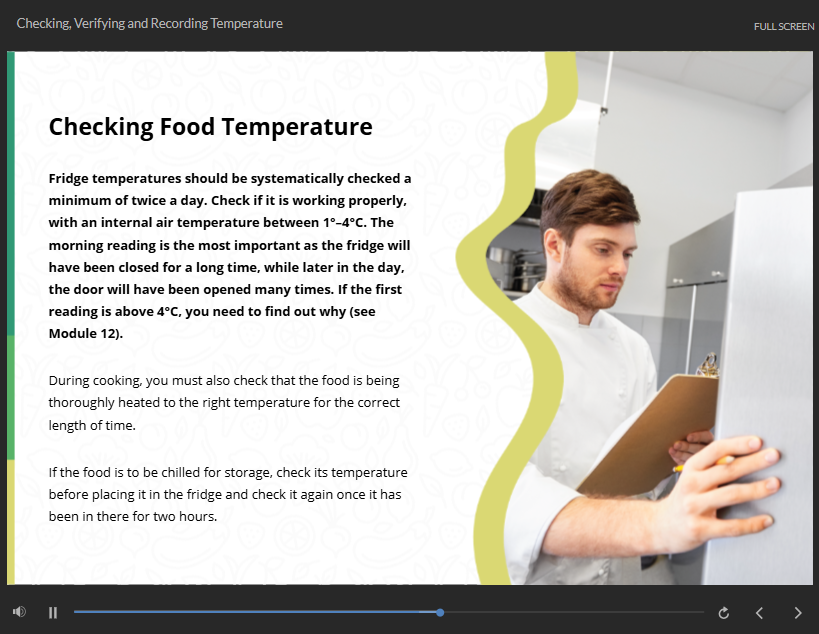
Module 13 will introduce you with the different equipment and process of measuring food temperature. You’ll also learn about when food temperature should be measured and the recording of temperature checks.
This module explains the common signs of food spoilage and prevention methods along with the different approaches to food preservation. Delivery and unloading of raw materials, wrapping and packaging, and stock rotation will also be discussed in this module.
The design, construction, and maintenance of food premises and equipment are essential for maintaining food safety. This module will tell how you can go with these factors to maintain the high standard of food safety.
Waste storage and the removal of waste, cleaning equipment, disinfection, and the procedures and methods of cleaning will be highlighted in this module. Learners will also familiarise with the in-houses and contract cleaning, and the role of the supervisor in cleaning.
The module will look at different types of pests, contamination caused by pests, and the standard control measures. A due-diligence defence and the role of the supervisor in pest control will also be discussed here.
This module will draw the curtain on the course by explaining the importance of training for maintaining the high standard of food safety. You’ll also learn about the training methods and the role of management in it.
In the final module you will familiarize with all the new practices that have recently emerged to adapt to the new normal. You will learn in detail about the standard hygiene and safety practices needed to be followed to minimize the risk of contamination of COVID-19.
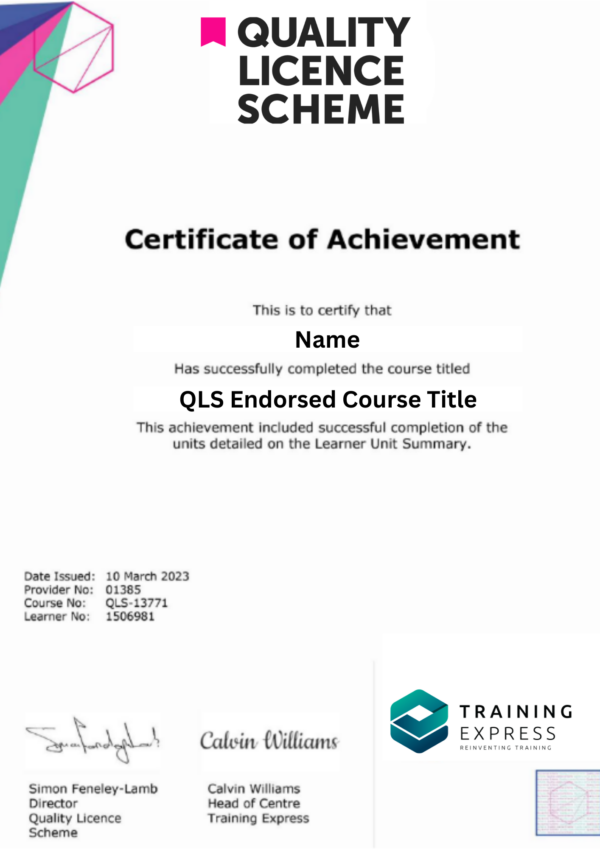
This course has been endorsed by the Quality Licence Scheme for its high-quality, non-regulated training and learning provision. Please note that it is not an accredited qualification and does not fall under Ofqual regulation. If you are seeking formal recognition, such as entry into higher education, your training provider can guide you. Additional details are also available in the Learner FAQs on the Quality Licence Scheme website.
Upon successfully completing the Diploma in Supervising Food Safety in Catering Level 3 course, learners will have the option to order an endorsed certificate as evidence of their accomplishment. This Certificate of Achievement is endorsed by the Quality Licence Scheme.
In addition, once you successfully complete your course, you will instantly receive a FREE CPD Accredited Digital Certificate.
Online Training Academy (OTA) operates as an authorised reseller of QLS-endorsed courses provided by Training Express Ltd. Learners enrolling through OTA will be assigned their courses within the OTA platform; however, all assessments, certification, and registration processes are managed and administered directly by Training Express Ltd.
1.Catering supervisors seeking advanced food safety knowledge
2.Restaurant or café managers overseeing kitchen operations
3.Hospitality professionals managing food handling teams
4.Food business owners aiming for legal compliance
5.Aspiring food safety officers or hygiene trainers
1.Food Safety Supervisor
2.Catering Manager
3.Kitchen Manager
4.Quality Assurance Officer
5.Environmental Health Assistant
6.Food Hygiene Trainer
| Diploma in Supervising Food Safety in Catering Level 3 | |||
| Food Safety – Introduction | 00:30:00 | ||
| Supervision of Food Safety | 00:34:00 | ||
| Food Safety Legislation | 00:36:00 | ||
| Food Safety Management Systems | 00:44:00 | ||
| Food Safety Management Tools | 00:30:00 | ||
| Microbiology | 00:18:00 | ||
| Contamination Hazards | 00:28:00 | ||
| Controlling Contamination | 00:39:00 | ||
| Bacterial Food Poisoning and Food-Borne Illness | 00:32:00 | ||
| Non-bacterial Food Poisoning | 00:32:00 | ||
| Personal Hygiene | 00:11:00 | ||
| Food and Temperature Control | 00:34:00 | ||
| Checking, Verifying and Recording Temperature | 00:25:00 | ||
| Food Spoilage and Preservation | 00:38:00 | ||
| Food Premises and Equipment: The Design and Construction | 00:35:00 | ||
| Waste Disposal, Cleaning and Disinfection | 00:13:00 | ||
| Pest Management | 00:09:00 | ||
| Food Safety Training for the Staff. | 00:15:00 | ||
| Reopening and Adapting Your Food Business During COVID-19 | 00:11:00 | ||
$204.86 ex VAT
SAVE 0% - OFFER ENDS SOON
![]() |