850 Students
Every organisation that works with children or vulnerable adults needs a strong Designated Safeguarding Lead (DSL) to protect and support those at risk. This course prepares learners with the essential knowledge and skills to confidently handle safeguarding concerns, recognise signs of abuse, and follow correct reporting procedures. By completing this course, learners will understand key safeguarding laws, how to communicate …
Every organisation that works with children or vulnerable adults needs a strong Designated Safeguarding Lead (DSL) to protect and support those at risk. This course prepares learners with the essential knowledge and skills to confidently handle safeguarding concerns, recognise signs of abuse, and follow correct reporting procedures.
By completing this course, learners will understand key safeguarding laws, how to communicate effectively, and the steps required to keep people safe.
The Designated Safeguarding Lead (DSL) course is divided into two key sections: Safeguarding Vulnerable Adults Training and Safeguarding Children.
In the Safeguarding Vulnerable Adults Training section, learners begin with an introduction to safeguarding and move through key legislation, recognising abuse, understanding organisational roles and policies, and developing strong communication skills. They will also learn how to share information safely, respond to disclosures, and report concerns appropriately.
The Safeguarding Children section covers the foundations of child protection, including UK laws and guidance, types of abuse, and child sexual exploitation. Learners will explore risk assessment, how to respond to disclosures, what actions to take after referral, and effective record keeping to ensure full compliance and protection.
In Module one, we will focus on what safeguarding vulnerable adults involves and detail the basic things we need to know about safeguarding.
In module two, we will start to look into the key legislations and why they are relevant to safeguarding as well as the key points to each act.
In module three, we will look into more detail about what constitutes as abuse or neglect and learn how to recognise the signs of abuse.
In module four we will look at the responsibilities that you will have in ensuring a vulnerable adults safety and wellbeing.
In module 5, we will look at communication methods within a care setting, and why it is important to build respectful and trusting relationships.
In module six, we will look at how we respond to a safeguarding concern.We will learn how we share the information we have, and who to report your concerns to.
In module seven, we will look at your responsibilities when raising a concern in more depth.
You will learn the specifics of what you must report and when and how you should do so.
In module one, we will learn what safeguarding means and why children may require safeguarding. It explores key safeguarding practices and principles.
In module two, we will get an in-depth understanding of child safeguarding laws, exploring key legislation and guidance. It covers the fundamental principles of The Children Act 1989.
In module three, we will learn about the different types of child abuse and neglect, taking a look at both emotional and physical abuse. We will also learn how to identify the signs of abuse, through case studies and audio-visual guidance.
In module four, we will take a detailed look at the different types of child sexual exploitation and their impact on children. We will also learn how to identify the signs of sexual exploitation in children.
In module five, we will learn what to do when a child makes a disclosure and how to handle that personal information. It also discusses why children may be reluctant to make a disclosure.
In module six, we will be guided through each step of the child safeguarding risk assessment and will learn how to identify child protection and safeguarding risk.
In module seven, we will learn what should be included in a child safeguarding referral and how to report a child at risk of harm. It explores action to be taken after a referral to child’s social care.
In this final module, we will explore best practice procedures for child safeguarding record-keeping, why record keeping is important and how to fill out a safeguarding report.
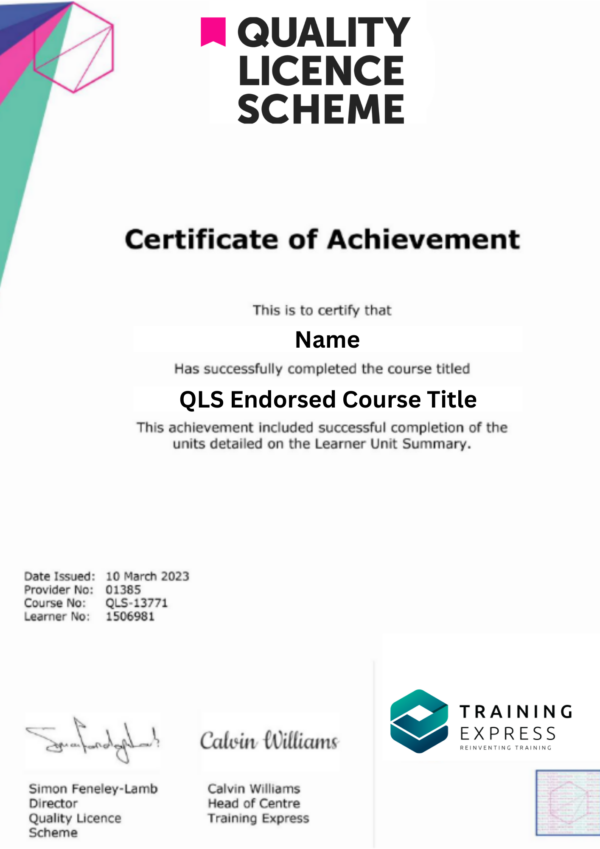
This course has been endorsed by the Quality Licence Scheme for its high-quality, non-regulated training and learning provision. Please note that it is not an accredited qualification and does not fall under Ofqual regulation. If you are seeking formal recognition, such as entry into higher education, your training provider can guide you. Additional details are also available in the Learner FAQs on the Quality Licence Scheme website.
Upon successfully completing the Diploma in Designated Safeguarding Lead (DSL) Level 5 course, learners will have the option to order an endorsed certificate as evidence of their accomplishment. This Certificate of Achievement is endorsed by the Quality Licence Scheme.
In addition, once you successfully complete your course, you will instantly receive a FREE CPD Accredited Digital Certificate.
Online Training Academy (OTA) operates as an authorised reseller of QLS-endorsed courses provided by Training Express Ltd. Learners enrolling through OTA will be assigned their courses within the OTA platform; however, all assessments, certification, and registration processes are managed and administered directly by Training Express Ltd.
1. Teachers and school safeguarding officers.
2. Health and social care professionals.
3. Support workers and youth mentors.
4. Managers in care or educational settings.
5. Volunteers working with vulnerable groups.
1. Designated Safeguarding Lead
2. Safeguarding Officer
3. Care Manager
4. Child Protection Officer
5. Social Care Worker
6. Support Worker
| Safeguarding Vulnerable Adults Training | |||
| Module 01: An Introduction to Safeguarding of Vulnerable Adults | 00:15:00 | ||
| Module 02: Safeguarding Legislations | 00:25:00 | ||
| Module 03: Understanding Abuse and Neglect | 00:25:00 | ||
| Module 04: Safeguarding Vulnerable AdultsPolicy, Roles and Responsibilities | 00:23:00 | ||
| Module 05: Understanding the Importance of Communication in Care | 00:20:00 | ||
| Module 06: Sharing Information and Responding To a Disclosure | 00:20:00 | ||
| Module 07: Reporting Your Concern | 00:17:00 | ||
| Safeguarding Children | |||
| Introduction to Safeguarding. | 00:21:00 | ||
| Laws and Guidance. | 00:42:00 | ||
| Child Abuse. | 00:48:00 | ||
| Child Sexual Exploitation. | 00:39:00 | ||
| Risks and Risk Assessment. | 00:16:00 | ||
| Responding to Disclosure and Reporting. | 00:32:00 | ||
| Things To Do After Referral | 00:22:00 | ||
| Record Keeping. | 00:17:00 | ||
| Mock Exam | |||
| Mock Exam – Diploma in Designated Safeguarding Lead (DSL) at QLS Level 5 | 00:20:00 | ||
| Final Exam | |||
| Final Exam – Diploma in Designated Safeguarding Lead (DSL) at QLS Level 5 | 00:20:00 | ||
$223.66 ex VAT
SAVE 0% - OFFER ENDS SOON
![]() |
01 Year of full Course access
Level 5
Endorsed Certificate of Compleiton