168 Students
Understanding how children think, feel, and grow is essential for anyone working with young people in Canada’s education, childcare, and community support sectors. This Child Psychology (Personality and Intellectual Development) course explores the mental, emotional, and behavioural development of children and adolescents. It focuses on how personality is shaped, how intellectual abilities develop, and how early experiences influence lifelong wellbeing. …
Understanding how children think, feel, and grow is essential for anyone working with young people in Canada’s education, childcare, and community support sectors. This Child Psychology (Personality and Intellectual Development) course explores the mental, emotional, and behavioural development of children and adolescents. It focuses on how personality is shaped, how intellectual abilities develop, and how early experiences influence lifelong wellbeing.
Designed for beginners as well as those working with children, the course examines developmental stages, attachment patterns, cognitive growth, and social-emotional learning. Learners can apply this knowledge in schools, childcare centres, youth programmes, counselling support services, and family-focused organisations across Canada.
With flexible online learning, learners can study at their own pace while gaining valuable insights into child behaviour and development. On completion, a recognised certificate is awarded to support career development in child-focused and psychology-related roles. Enrol today and strengthen your understanding of how children develop and thrive.
Please note: This Child Psychology (Personality and Intellectual Development) Course only gives you the theoretical knowledge that you need to excel in this field. This Course doesn’t entitle you to practise as a professional in this specific field.
This course is ideal for:
All of our courses, including this Child Psychology (Personality and Intellectual Development) Course, are fully accredited, providing you with up-to-date skills and knowledge and helping you to become more competent and effective in your chosen field.
All of our courses are accredited by the CPD Quality Standards as conforming to universally accepted Continuing Professional Development (CPD) guidelines.
The Quality Licence Scheme (QLS) is a trusted endorsement framework that certifies high-quality, non-regulated training programmes across various sectors.

The Association of Healthcare Trainers (AoHT) promotes high-quality healthcare training, supporting providers to deliver relevant, industry-aligned education and improve professional standards.
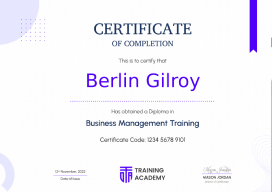
Once you’ve successfully completed your course, you will immediately be sent a digital certificate. Also, you can have your printed certificate delivered by post (shipping cost CA$9.99). All of our courses are fully accredited, providing you with up-to-date skills and knowledge and helping you to become more competent and effective in your chosen field.
This module introduces the foundation of child psychology and its role in understanding how children think, feel, and behave. Learners explore how psychological principles are applied in real-life settings such as schools, childcare centres, and family support services. It also highlights why understanding children’s emotional and cognitive processes is essential for supporting healthy development.
This section explains the overall process of child development from infancy through adolescence. It covers physical, emotional, social, and cognitive growth, helping learners understand how children gradually build skills, behaviours, and emotional awareness over time.
Here, learners examine the different stages of childhood and adolescence in detail. Each stage is linked with specific developmental milestones, showing how children’s needs, behaviour, and thinking patterns change as they grow older.
This module explores the key areas of development, including cognitive, emotional, social, and physical growth. It explains how these areas are interconnected and how progress in one area can influence overall development.
Learners are introduced to Erikson’s psychosocial theory, which explains how personality develops through a series of life stages. Each stage presents challenges that shape confidence, identity, and social relationships during childhood.
This section focuses on the importance of early relationships between children and caregivers. It explains how secure attachment supports emotional stability, trust, and healthy social development later in life.
This module explores how emotional separation, neglect, or loss can affect a child’s psychological wellbeing. It highlights behavioural responses, emotional distress, and long-term effects on development.
Learners study the wide range of influences on child development, including genetics, family environment, education, culture, and social conditions. It explains how these factors interact to shape personality and behaviour.
This module focuses on how children develop thinking, reasoning, memory, and problem-solving skills. It introduces key cognitive development theories and explains how intellectual abilities evolve over time.
This section examines how children build relationships, understand emotions, and develop empathy. It highlights the importance of emotional regulation and social interaction in shaping behaviour.
Learners explore how children learn right and wrong, develop values, and make ethical decisions. This module explains how moral reasoning develops through experience, education, and social influence.
This module explains how personality traits and intelligence develop from early childhood into adolescence. It explores how experiences, environment, and learning shape individual differences.
This section covers how children acquire language skills, including speaking, listening, reading, and writing. It also explores communication milestones and factors that influence language development.
Learners explore common challenges during infancy, including developmental delays, emotional difficulties, and early behavioural concerns. The module highlights the importance of early observation and support.
This module examines emotional, behavioural, and learning difficulties that may appear during school-age years and adolescence. It discusses possible causes and early signs of concern.
This final section focuses on psychological and emotional challenges during teenage years, including identity struggles, peer pressure, stress, and emotional instability. It highlights the importance of supportive environments during this stage.
Understanding the normal and abnormal psychological patterns of a child can help parents understand how to best communicate and connect with their child, teach their child coping mechanisms for managing emotions, and help their child progress and thrive in each new developmental stage.
Some intellectual development milestones you may notice in five and six-year-olds include: Vocabulary increasing to 2,000 words, sentences of five or more words. Can count up to 10 objects at one time, can copy complex shapes. Begin to reason and argue, uses words like why and because.
It is ideal for teachers, childcare workers, youth support staff, parents, and anyone interested in child development.
You will learn how children grow through different stages and how their needs change over time.
You learn about child development stages, attachment theory, cognitive development, personality formation, emotional growth, language development, and common childhood psychological challenges.
Child development is usually divided into infancy, early childhood, middle childhood, and adolescence, each stage having different emotional, social, and cognitive milestones.
| Module 01: Child Psychology and Its Major Context | |||
| Module 01: Child Psychology and Its Major Context | 00:03:00 | ||
| Module 02: Understanding Child Development | |||
| Module 02: Understanding Child Development | 00:21:00 | ||
| Module 03: The Scope and Stages of Child Development | |||
| Module 03: The Scope and Stages of Child Development | 00:04:00 | ||
| Module 04: The Areas of Child Development | |||
| Module 04: The Areas of Child Development | 00:03:00 | ||
| Module 05: Erikson’s Theory of Child Development | |||
| Module 05: Erikson’s Theory of Child Development | 00:03:00 | ||
| Module 06: Attachment and Relationship Building in Childhood | |||
| Module 06: Attachment and Relationship Building in Childhood | 00:35:00 | ||
| Module 07: Impacts of Separation and Loss of Attachment | |||
| Module 07: Impacts of Separation and Loss of Attachment | 00:24:00 | ||
| Module 08: Factors That Influence Development | |||
| Module 08: Factors That Influence Development | 00:26:00 | ||
| Module 09: Cognitive Development | |||
| Module 09: Cognitive Development | 00:20:00 | ||
| Module 10: Social and Emotional Development | |||
| Module 10: Social and Emotional Development | 00:34:00 | ||
| Module 11: Moral and Ethical Development in Children | |||
| Module 11: Moral and Ethical Development in Children | 00:17:00 | ||
| Module 12: Personality and Intellectual Development in Children | |||
| Module 12: Personality and Intellectual Development in Children | 00:31:00 | ||
| Module 13: Language Development | |||
| Module 13: Language Development | 00:23:00 | ||
| Module 14: Problems of Infancy | |||
| Module 14: Problems of Infancy | 00:14:00 | ||
| Module 15:Problems in Childhood and Adolescence | |||
| Module 15:Problems in Childhood and Adolescence | 00:22:00 | ||
| Module 16: Problems of Adolescence | |||
| Module 16: Problems of Adolescence | 00:22:00 | ||
| Mock Exam | |||
| Mock Exam – Child Psychology (Personality and Intellectual Development) | 00:20:00 | ||
| Final Exam | |||
| Final Exam – Child Psychology (Personality and Intellectual Development) | 00:20:00 | ||
$125 Original price was: $125.$20Current price is: $20. ex VAT
SAVE 84% - OFFER ENDS SOON
![]() |
01 Year of full Course access
Intermediate
Endorsed Certificate of Compleiton