2 Students
The Change Management Course is designed to help learners understand how organisations in Canada adapt to internal and external changes across industries such as business, healthcare, retail, and public services. Change is a constant part of modern workplaces, and managing it effectively is essential for maintaining productivity, staff engagement, and smooth operations. This course explores how change is introduced, planned, …
The Change Management Course is designed to help learners understand how organisations in Canada adapt to internal and external changes across industries such as business, healthcare, retail, and public services. Change is a constant part of modern workplaces, and managing it effectively is essential for maintaining productivity, staff engagement, and smooth operations.
This course explores how change is introduced, planned, and implemented within organisations. Learners study human responses to change, leadership approaches, communication strategies, and methods used to reduce resistance. It also focuses on building resilience and flexibility in both individuals and teams during transition periods.
Suitable for beginners and professionals in administrative, supervisory, and team-based roles, the course provides practical understanding of how change processes work in real Canadian workplace environments. It helps learners develop awareness of how organisations guide people through transitions while maintaining stability and performance.
Please note: This Change Management Course only gives you the theoretical knowledge that you need to excel in this field. This Course doesn’t entitle you to practise as a professional in this specific field.
This course is ideal for:
All of our courses, including this Change Management Course, are fully accredited, providing you with up-to-date skills and knowledge and helping you to become more competent and effective in your chosen field.
All of our courses are accredited by the CPD Quality Standards as conforming to universally accepted Continuing Professional Development (CPD) guidelines.
The Quality Licence Scheme (QLS) is a trusted endorsement framework that certifies high-quality, non-regulated training programmes across various sectors.

The Association of Healthcare Trainers (AoHT) promotes high-quality healthcare training, supporting providers to deliver relevant, industry-aligned education and improve professional standards.
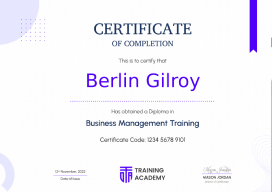
Once you’ve successfully completed your course, you will immediately be sent a digital certificate. Also, you can have your printed certificate delivered by post (shipping cost CA$9.99). All of our courses are fully accredited, providing you with up-to-date skills and knowledge and helping you to become more competent and effective in your chosen field.
This module introduces the foundation of change management and explains why it plays a key role in modern organisations. Learners explore how changes in systems, processes, or leadership can impact teams and overall business performance, setting the stage for structured change approaches.
This section focuses on the early stages of change planning within organisations. Learners study how readiness is assessed, how communication is planned, and how potential challenges are identified before change is implemented to reduce disruption.
This module explains the concept of “What’s In It For Me” (WIFM) and how it influences employee engagement. Learners understand how personal motivation, benefits, and perceived value affect acceptance or resistance to workplace change.
This section explores how individuals emotionally and psychologically respond to change. Learners examine reactions such as uncertainty, fear, and acceptance, and how these responses influence behaviour in the workplace.
This module highlights the role of leadership in guiding successful change. Learners explore how managers provide direction, support teams, communicate expectations, and maintain stability throughout transition periods.
This section focuses on building trust and securing support for change initiatives. Learners study communication strategies, stakeholder engagement, and methods used to encourage cooperation across teams.
This module explains how organisations evaluate the success of change initiatives. Learners explore performance measurement, outcome analysis, and how improvements are assessed after implementation.
This section introduces appreciative inquiry as a positive approach to change. Learners focus on identifying strengths, opportunities, and existing successes to support constructive and solution-focused development.
This module covers how to influence and involve stakeholders effectively during change. Learners explore relationship-building, communication techniques, and strategies for gaining long-term commitment.
This section focuses on developing resilience during organisational change. Learners study coping strategies, emotional strength, and support systems that help individuals and teams adapt successfully.
This module explains the importance of adaptability in changing environments. Learners explore how flexible thinking and open attitudes help reduce resistance and improve adjustment to new processes.
The final module summarises the key principles of change management. Learners reflect on how structured planning, communication, leadership, and adaptability work together to ensure successful organisational transformation.
You learn leadership, communication, stakeholder management, adaptability, resilience building, and strategies for handling resistance to change.
It is suitable for team leaders, supervisors, HR staff, office workers, project coordinators, and anyone involved in organisational change.
WIFM stands for “What’s In It For Me,” which explains how personal benefits influence how employees respond to change.
They use communication, engagement strategies, training, and leadership support to reduce uncertainty and encourage acceptance.
Yes, it is valuable for roles in management, HR, operations, and project coordination across Canadian industries.
It is a positive approach to change that focuses on strengths, successes, and opportunities rather than problems.
| Module 01: Getting Started | |||
| Getting Started | 00:02:00 | ||
| Module 02: Preparing for Change | |||
| Preparing for Change | 00:02:00 | ||
| Preparing for Change- Case Study | 00:01:00 | ||
| Module 03: Identifying the WIFM | |||
| Identifying the WIFM | 00:02:00 | ||
| Identifying the WIFM- Case Study | 00:01:00 | ||
| Module 04: Understanding Change on an Individual Level | |||
| Understanding Change | 00:04:00 | ||
| Understanding Change- Case Study | 00:01:00 | ||
| Module 05: Leading and Managing the Change | |||
| Leading & Managing the Change | 00:03:00 | ||
| Leading & Managing the Change- Case Study | 00:01:00 | ||
| Module 06: Gaining Support | |||
| Gaining Support | 00:02:00 | ||
| Gaining Support- Case Study | 00:01:00 | ||
| Module 07: Making it all Worthwhile | |||
| Making It All Worthwhile | 00:04:00 | ||
| Making It All Worthwhile- Case Study | 00:01:00 | ||
| Module 08: Using Appreciative Inquiry | |||
| Using Appreciative Inquiry | 00:06:00 | ||
| Using Appreciative Inquiry- Case Study | 00:01:00 | ||
| Module 09: Bringing People to Your Side | |||
| Bringing People to Your Side | 00:03:00 | ||
| Bringing People to Your Side- Case Study | 00:01:00 | ||
| Module 10: Building Resiliency | |||
| Building Resiliency | 00:05:00 | ||
| Building Resiliency- Case Study | 00:01:00 | ||
| Module 11: Building Flexibility | |||
| Building Flexibility | 00:02:00 | ||
| Building Flexibility- Case Study | 00:01:00 | ||
| Module 12: Closing | |||
| Closing | 00:01:00 | ||
PRIVATE
SAVE 0% - OFFER ENDS SOON
![]() |
01 Year of full Course access
Level 2
Endorsed Certificate of Compleiton