376 Students
Strong leadership and effective care coordination are essential across Canada’s healthcare, community support, and social care sectors. This Care Manager course is designed to help learners understand management responsibilities, team leadership, risk assessment, workplace safety, and communication within care-focused environments. Whether you are new to management or looking to strengthen your leadership abilities, this course provides valuable knowledge for today’s …
Strong leadership and effective care coordination are essential across Canada’s healthcare, community support, and social care sectors. This Care Manager course is designed to help learners understand management responsibilities, team leadership, risk assessment, workplace safety, and communication within care-focused environments. Whether you are new to management or looking to strengthen your leadership abilities, this course provides valuable knowledge for today’s care industry.
Suitable for both beginners and existing workers, the course explores coaching, mentoring, performance management, hazard identification, risk control, business continuity planning, and caregiver responsibilities. These skills can be applied in healthcare facilities, community care services, residential care settings, support organisations, and administrative management roles throughout Canada.
With flexible online study and self-paced learning, you can develop your knowledge around your existing commitments. Upon successful completion, you will receive a certificate that can support your continuing professional development. Enrol today and take the next step towards a rewarding management career in Canada’s care sector.
Please note: This Care Manager Course only gives you the theoretical knowledge that you need to excel in this field. This Course doesn’t entitle you to practise as a professional in this specific field.
By the end of the Care Manager Course, learners will be able to:
All of our courses, including this Care Manager Course, are fully accredited, providing you with up-to-date skills and knowledge and helping you to become more competent and effective in your chosen field.
All of our courses are accredited by the CPD Quality Standards as conforming to universally accepted Continuing Professional Development (CPD) guidelines.

The Quality Licence Scheme (QLS) is a trusted endorsement framework that certifies high-quality, non-regulated training programmes across various sectors.

The Association of Healthcare Trainers (AoHT) promotes high-quality healthcare training, supporting providers to deliver relevant, industry-aligned education and improve professional standards.
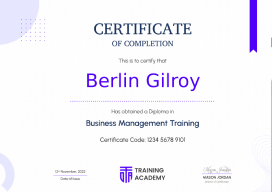
Once you’ve successfully completed your course, you will immediately be sent a digital certificate. Also, you can have your printed certificate delivered by post (shipping cost CA$9.99). All of our courses are fully accredited, providing you with up-to-date skills and knowledge and helping you to become more competent and effective in your chosen field.
The detailed curriculum outline of our Care Manager Course is as follows:
Stepping into a management role comes with new responsibilities and expectations. This module introduces the transition from employee to manager, focusing on leadership mindset, decision-making, accountability, and the skills required to guide teams effectively. Learners will explore how successful managers build credibility, gain trust, and establish positive workplace relationships from the start.
Coaching and mentoring are valuable tools for supporting employee growth and development. In this module, learners will explore the key differences between coaching and mentoring, their benefits in workplace settings, and the role managers play in helping team members improve performance and confidence. The module also covers active listening and effective guidance techniques.
Building on the previous module, learners will examine more advanced coaching and mentoring strategies. Topics include setting development goals, providing meaningful feedback, encouraging accountability, and supporting long-term career growth. The module highlights how strong coaching relationships can improve employee engagement and organisational performance.
Effective managers must be able to assess and improve employee performance. This module explains how performance measurement systems work, including goal setting, key performance indicators, and performance reviews. Learners will also explore techniques for delivering constructive feedback that encourages improvement while maintaining positive workplace relationships.
Motivation plays a critical role in achieving organisational success. This module explores factors that influence motivation among managers and team leaders, including workplace culture, recognition, communication, and personal development opportunities. Learners will discover methods for maintaining enthusiasm, improving productivity, and fostering a positive working environment.
Poor management can negatively affect morale, productivity, and employee retention. This module examines common warning signs of ineffective leadership, such as poor communication, lack of accountability, inconsistent decision-making, and inadequate support for employees. Learners will gain insight into identifying and addressing management challenges before they escalate.
Trust is a foundation of successful leadership. This module explores how managers can build strong working relationships through delegation, transparency, collaboration, and mutual respect. Learners will understand the importance of empowering others, encouraging responsibility, and creating an environment where managers and employees can perform confidently.
Handling workplace complaints requires fairness, professionalism, and effective communication. This module examines how organisations should respond when employees raise concerns about management. Learners will explore complaint procedures, conflict resolution strategies, and approaches for ensuring that all parties are treated respectfully throughout the process.
Managers must know when intervention is necessary and when employees should be allowed to resolve issues independently. This module focuses on recognising situations that require leadership involvement, including performance concerns, conflicts, safety risks, and workplace misconduct. Learners will develop decision-making skills that balance support with accountability.
Strong managers share a number of essential personal and professional qualities. This module explores attributes such as integrity, empathy, communication, adaptability, resilience, and responsibility. Learners will understand how these characteristics contribute to effective leadership and help build positive workplace cultures.
Risk awareness is essential in both care and workplace environments. This module introduces the process of identifying hazards that may affect employee wellbeing, operational efficiency, or service quality. Learners will examine different types of workplace risks and understand why early identification is crucial for prevention and safety.
Proactive management helps reduce the likelihood of incidents and disruptions. This module focuses on recognising potential problems before they become serious issues. Learners will explore observation techniques, workplace assessments, and methods for identifying warning signs that may indicate future risks.
Continuing the theme of prevention, this module examines additional strategies for anticipating and managing workplace challenges. Learners will discover how planning, monitoring, and continuous evaluation contribute to safer and more efficient operations while supporting long-term organisational success.
Safety and risk management are not solely management responsibilities. This module highlights the role every employee plays in maintaining a safe and productive workplace. Learners will explore how teamwork, communication, and shared accountability contribute to organisational safety and compliance.
Control measures must be regularly reviewed to remain effective. This module explains how organisations monitor risk controls, evaluate their effectiveness, and implement necessary updates. Learners will understand the importance of continuous improvement in maintaining workplace safety and reducing operational risks.
Managing risk requires structured approaches and effective planning. This module introduces commonly used risk management techniques, including risk assessment frameworks, risk prioritisation methods, and mitigation strategies. Learners will gain a clearer understanding of how organisations minimise threats and maintain stability.
A safe workplace depends on clear procedures and accurate reporting systems. This module covers office safety principles, incident reporting processes, workplace documentation, and compliance requirements. Learners will understand how effective reporting contributes to accountability, safety improvement, and organisational transparency.
Unexpected events can affect operations, finances, and service delivery. This module explores the purpose of business impact analysis and how organisations evaluate potential disruptions. Learners will examine methods used to identify critical functions, assess consequences, and support business continuity planning.
Every organisation should be prepared for emergencies and unexpected disruptions. This module introduces the key components of a disaster recovery plan, including response procedures, resource management, communication strategies, and recovery priorities. Learners will understand how preparation supports organisational resilience.
This module brings together the key concepts covered throughout the risk management section of the course. Learners will review hazard identification, risk evaluation, control measures, and prevention strategies while reinforcing their understanding of effective risk assessment practices.
Communication is one of the most important skills for managers and care professionals. This module examines verbal, non-verbal, written, and interpersonal communication techniques. Learners will explore how clear communication improves teamwork, strengthens relationships, reduces misunderstandings, and supports high-quality service delivery.
The final module focuses on the responsibilities of caregivers and healthcare professionals within care environments. Learners will explore professional standards, ethical considerations, patient-centred care, confidentiality, and compassionate service delivery. The module highlights the importance of professionalism and accountability when supporting the wellbeing of others.
Yes, the course is designed for both beginners and individuals already working in healthcare, social care, or support services.
A Care Manager coordinates care services, supports staff, oversees service delivery, manages risks, and helps ensure quality care standards are maintained.
The course provides management and leadership knowledge that may support career progression within healthcare and care-related settings.
You will learn leadership, communication, mentoring, performance management, risk assessment, workplace safety, and care management principles.
Healthcare, community services, residential care, social support organisations, and administrative management roles can all benefit from these skills.
Yes, learners receive a certificate upon successful completion of the course.
| Module 01: Grooming a New Manager | |||
| Grooming a New Manager | 00:09:00 | ||
| Module 02: Coaching and Mentoring (I) | |||
| Coaching and Mentoring (I) | 00:08:00 | ||
| Module 03: Coaching and Mentoring (II) | |||
| Coaching and Mentoring (II) | 00:07:00 | ||
| Module 04: Measuring Performance | |||
| Measuring Performance | 00:07:00 | ||
| Module 05: Motivating Managers | |||
| Motivating Managers | 00:07:00 | ||
| Module 06: Signs of Poor Management | |||
| Signs of Poor Management | 00:07:00 | ||
| Module 07: Trust Your Team of Managers | |||
| Trust Your Team of Managers | 00:00:00 | ||
| Module 08: When an Employee Complains About Their Manager | |||
| When an Employee Complains About Their Manager | 00:07:00 | ||
| Module 09: When Do You Step In? | |||
| When Do You Step In? | 00:07:00 | ||
| Module 10: Remember These Basic Qualities | |||
| Remember These Basic Qualities | 00:07:00 | ||
| Module 11: Identifying Hazards and Risks | |||
| Identifying Hazards and Risks | 00:10:00 | ||
| Module 12: Seeking Out Problems Before They Happen (I) | |||
| Seeking Out Problems Before They Happen (I) | 00:07:00 | ||
| Module 13: Seeking Out Problems Before They Happen (II) | |||
| Seeking Out Problems Before They Happen (II) | 00:07:00 | ||
| Module 14: Everyone’s Responsibility | |||
| Everyone’s Responsibility | 00:07:00 | ||
| Module 15: Tracking and Updating Control Measures | |||
| Tracking and Updating Control Measures | 00:09:00 | ||
| Module 16: Risk Management Techniques | |||
| Risk Management Techniques | 00:07:00 | ||
| Module 17: General Office Safety and Reporting | |||
| General Office Safety and Reporting | 00:09:00 | ||
| Module 18: Business Impact Analysis | |||
| Business Impact Analysis | 00:08:00 | ||
| Module 19: Disaster Recovery Plan | |||
| Disaster Recovery Plan | 00:07:00 | ||
| Module 20: Summary of Risk Assessment | |||
| Summary of Risk Assessment | 00:07:00 | ||
| Module 21: Communication and its Relevance | |||
| Communication and its Relevance | 00:43:00 | ||
| Module 22: Role as A Caregiver and Healthcare Professional | |||
| Role as a Caregiver and Healthcare Professional | 00:25:00 | ||
| Mock Exam | |||
| Mock Exam – Care Manager | 00:20:00 | ||
| Final Exam | |||
| Final Exam – Care Manager | 00:20:00 | ||
$199 Original price was: $199.$20Current price is: $20. ex VAT
SAVE 90% - OFFER ENDS SOON
![]() |
01 Year of full Course access
Advance
Endorsed Certificate of Compleiton