249 Students
Numbers tell the story behind every successful organisation. Whether managing business finances, preparing reports, or supporting decision-making, accounting plays a vital role across Canada’s corporate, public, and non-profit sectors. The Accountancy: Accounting Training course is designed to help learners develop a strong understanding of accounting principles, financial reporting, bookkeeping, budgeting, and auditing practices. Suitable for beginners and those looking to …
Numbers tell the story behind every successful organisation. Whether managing business finances, preparing reports, or supporting decision-making, accounting plays a vital role across Canada’s corporate, public, and non-profit sectors. The Accountancy: Accounting Training course is designed to help learners develop a strong understanding of accounting principles, financial reporting, bookkeeping, budgeting, and auditing practices.
Suitable for beginners and those looking to strengthen their financial knowledge, this course covers accounting concepts, double-entry bookkeeping, financial statements, cash flow analysis, profit and loss reporting, and financial planning. These skills are widely valued in accounting firms, businesses, government organisations, financial departments, and entrepreneurial ventures throughout Canada.
Study online at your own pace and build confidence in accounting and financial management. Earn a recognised certificate, enhance your career prospects, and gain knowledge that supports success in a wide range of finance-related roles.
Please note: This Accountancy: Accounting Training Course only gives you the theoretical knowledge that you need to excel in this field. This Course doesn’t entitle you to practise as a professional in this specific field.
By the end of the Accountancy: Accounting Training Course, learners will be able to:
All of our courses, including this Accountancy: Accounting Training Course Course, are fully accredited, providing you with up-to-date skills and knowledge and helping you to become more competent and effective in your chosen field.
All of our courses are accredited by the CPD Quality Standards as conforming to universally accepted Continuing Professional Development (CPD) guidelines.
The Quality Licence Scheme (QLS) is a trusted endorsement framework that certifies high-quality, non-regulated training programmes across various sectors.

The Association of Healthcare Trainers (AoHT) promotes high-quality healthcare training, supporting providers to deliver relevant, industry-aligned education and improve professional standards.
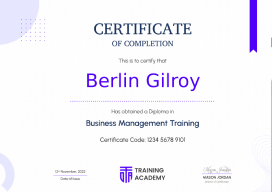
Once you’ve successfully completed your course, you will immediately be sent a digital certificate. Also, you can have your printed certificate delivered by post (shipping cost CA$9.99). All of our courses are fully accredited, providing you with up-to-date skills and knowledge and helping you to become more competent and effective in your chosen field.
Start by exploring the purpose and importance of accounting in modern organisations. This module introduces fundamental accounting principles, financial terminology, and the role accounting plays in business decision-making.
Discover the responsibilities and functions of accountants across different industries. You’ll examine how accountants support financial management, reporting, compliance, and organisational planning.
Strong financial reporting relies on established principles and standards. This module explains key accounting concepts, reporting frameworks, consistency principles, and the foundations of reliable financial information.
Every financial transaction affects at least two accounts. In this module, you’ll learn the principles of double-entry bookkeeping, debits and credits, ledger entries, and maintaining accurate financial records.
Explore one of the most important financial statements used by organisations. This module explains assets, liabilities, equity, and how balance sheets provide insight into financial position and stability.
Revenue and expenses reveal how a business performs financially. You’ll learn how income statements are prepared, interpreted, and used to evaluate operational performance over a specific period.
Bring together key financial reporting concepts by examining the major financial statements used by organisations. The module explains how these reports support informed business and financial decisions.
Profit does not always equal cash availability. This module explores cash flow statements, cash movement tracking, operating activities, investing activities, and financing activities within organisations.
Take a deeper look at profit and loss reporting and how organisations assess financial performance. You’ll learn how revenues, costs, and expenses influence profitability and business outcomes.
Effective financial planning helps organisations achieve their objectives. This module examines budgeting techniques, forecasting methods, financial control measures, and resource allocation strategies.
Conclude the course by exploring the purpose and process of auditing. You’ll learn how audits evaluate financial records, support transparency, improve accountability, and strengthen stakeholder confidence.
Yes. The course is designed for beginners and starts with accounting fundamentals before progressing to bookkeeping, financial reporting, budgeting, and auditing concepts.
You will learn accounting principles, double-entry bookkeeping, balance sheets, income statements, financial statements, cash flow analysis, profit and loss reporting, budgeting, and auditing fundamentals.
The course provides foundational accounting knowledge that can support entry-level opportunities in bookkeeping, accounting administration, payroll, finance support, and related fields.
Accounting skills are valuable across virtually all industries, including finance, healthcare, retail, manufacturing, government, education, construction, and non-profit organisations.
Yes. Learners will explore budgeting techniques, financial forecasting, resource allocation, and planning strategies used to support organisational objectives.
Yes. Upon successful completion, learners receive a certificate demonstrating their knowledge of accounting principles, financial reporting, bookkeeping, and budgeting concepts.
| Module 01: Introduction to Accounting | |||
| Introduction to Accounting | 00:15:00 | ||
| Module 02: The Role of an Accountant | |||
| The Role of an Accountant | 00:16:00 | ||
| Module 03: Accounting Concepts and Standards | |||
| Accounting Concepts and Standards | 00:22:00 | ||
| Module 04: Double-Entry Bookkeeping | |||
| Double-Entry Bookkeeping | 00:23:00 | ||
| Module 05: Balance Sheet | |||
| Balance Sheet | 00:21:00 | ||
| Module 06: Income statement | |||
| Income statement | 00:19:00 | ||
| Module 07: Financial statements | |||
| Financial statements | 00:27:00 | ||
| Module 08: Cash Flow Statements | |||
| Cash Flow Statements | 00:17:00 | ||
| Module 09: Understanding Profit and Loss Statement | |||
| Understanding Profit and Loss Statement | 00:17:00 | ||
| Module 10: Financial Budgeting and Planning | |||
| Financial Budgeting and Planning | 00:28:00 | ||
| Module 11: Auditing | |||
| Auditing | 00:00:00 | ||
| Google Review | |||
| Google Review | 00:00:00 | ||
$125 Original price was: $125.$20Current price is: $20. ex VAT
SAVE 84% - OFFER ENDS SOON
![]() |
01 Year of full Course access
Intermediate
Endorsed Certificate of Compleiton