787 Students
Level 2 Food Allergy Awareness Training develops essential knowledge for people who prepare, serve, store, or communicate about food in Canada. Learners explore food allergies, intolerances, coeliac disease, common allergens, symptoms, anaphylaxis, emergency responses, allergen information, and cross-contact prevention. The training focuses on recognising allergy-related risks and handling allergen information responsibly. Learners examine ingredient verification, safe preparation areas, storage, separation, …
Level 2 Food Allergy Awareness Training develops essential knowledge for people who prepare, serve, store, or communicate about food in Canada. Learners explore food allergies, intolerances, coeliac disease, common allergens, symptoms, anaphylaxis, emergency responses, allergen information, and cross-contact prevention.
The training focuses on recognising allergy-related risks and handling allergen information responsibly. Learners examine ingredient verification, safe preparation areas, storage, separation, cleaning, food labelling, customer enquiries, communication, and emergency procedures. These topics support safer food practices and more informed service for customers with allergies or dietary restrictions.
Online, self-paced learning lets learners study around work and other commitments. An assessment checks understanding, and successful completion can provide a certificate as a training record. Specific allergen and food-labelling requirements may vary across Canada depending on applicable federal, provincial, territorial, municipal, and workplace requirements.
This course develops practical knowledge for recognising food allergy risks and supporting safer food handling.
The course is suitable for learners whose work involves preparing, serving, storing, or discussing food with customers.
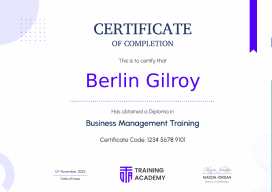
Once you’ve successfully completed your course, you will immediately be sent a digital certificate. Also, you can have your printed certificate delivered by post (shipping cost £3.99). All of our courses are fully accredited, providing you with up-to-date skills and knowledge and helping you to become more competent and effective in your chosen field. Our certifications have no expiry dates, although we do recommend that you renew them every 12 months.
Food allergy awareness is an important part of safer food service and responsible customer care.
Food allergy awareness can complement food-service roles where allergen information and safe food handling are part of everyday responsibilities. Salary ranges vary by province, employer, experience, and position.
The course is designed to be accessible to beginners and existing food-service workers.
All of our courses, including this Food Allergy Awareness Training – Level 2, are fully accredited, providing you with up-to-date skills and knowledge and helping you to become more competent and effective in your chosen field.
All of our courses are accredited by the CPD Quality Standards as conforming to universally accepted Continuing Professional Development (CPD) guidelines.
The Quality Licence Scheme (QLS) is a trusted endorsement framework that certifies high-quality, non-regulated training programmes across various sectors.
The Association of Healthcare Trainers (AoHT) promotes high-quality healthcare training, supporting providers to deliver relevant, industry-aligned education and improve professional standards.
The curriculum covers food reactions, emergency response, allergen communication, workplace controls, customer service, and safe ingredient handling across six focused modules.
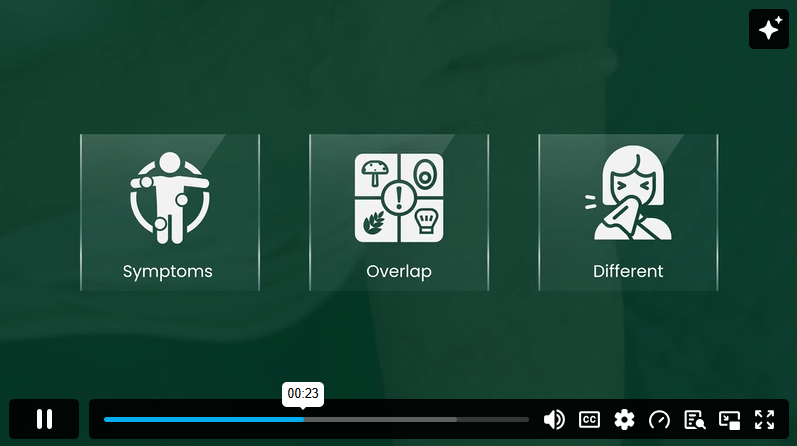
Learn the differences between food allergies, intolerances, and food hypersensitivity. The module explores coeliac disease, common symptoms and triggers, high-risk foods, and how seasonal or cultural food practices can influence allergen risks.
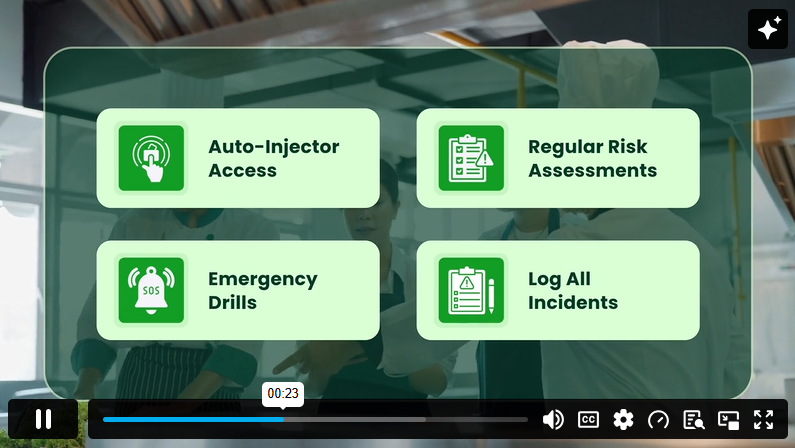
Explore how to recognise serious allergic reactions, including anaphylaxis, and understand the appropriate response in food-service environments. Topics include emergency procedures, adrenaline auto-injector awareness, contacting emergency services, and post-incident reporting.
Develop an understanding of how allergen information should be communicated to customers. The module covers ingredient labels, menu and signage considerations, cross-contact information, customer enquiries, and applicable Canadian food-information requirements.
Explore how food businesses can reduce allergen risks through appropriate storage, separation, cleaning, documentation, and staff responsibilities. The module also considers how teams should respond to customer allergen enquiries.
Build confidence when communicating with customers about food allergies and special dietary requirements. Learners consider how to ask appropriate questions, handle special requests, respond to concerns, and communicate information accurately without making unsafe assumptions.
Learn how to verify ingredients and organise preparation areas to reduce allergen cross-contact. Topics include utensils, preparation equipment, storage of partially used ingredients, and maintaining appropriate separation during food preparation.
Review the key principles of food allergy awareness, including allergen identification, customer communication, cross-contact prevention, ingredient handling, and emergency response. The conclusion reinforces the importance of following workplace procedures and applicable food-safety requirements.
Food allergy awareness training is suitable for food handlers, kitchen staff, restaurant and catering employees, hospitality workers, bakery and café staff, food retail employees, supervisors, and people beginning a career in food service. It can also benefit anyone whose role involves answering customer questions about ingredients or dietary requirements.
You will learn how to identify food allergies and intolerances, recognise common allergy symptoms, understand anaphylaxis, identify allergen risks, prevent cross-contact, check ingredient information, communicate with customers, and follow appropriate emergency procedures. The course also covers safe storage, preparation, cleaning, separation, and allergen-management practices.
The course explores common food allergens and the risks they can create during food preparation and service. Learners develop an understanding of how allergens may be present in ingredients, recipes, prepared foods, and shared preparation environments, along with the importance of accurate ingredient verification.
Yes. The course is suitable for beginners as well as people already working in food service. No formal qualifications are required, although basic English reading and writing skills and basic computer literacy can help learners complete online training comfortably.
Yes. An online food allergy awareness course can allow learners to study at their own pace and fit training around work, education, and other commitments. This format can be particularly useful for food-service workers who need flexible professional development.
Successful completion can provide a certificate that serves as a record of training. The certificate should be considered evidence of course completion rather than a substitute for any mandatory food-safety certification, workplace training, licensing, or regulatory requirement that may apply to a specific role or location in Canada.
| Module 01: Food Reactions and Dietary Risks | |||
| 1. Introduction | 00:01:00 | ||
| 1.1. Food Reactions and Dietary Risks | 00:01:00 | ||
| 1.1.1 Understanding Food Hypersensitivity | 00:01:00 | ||
| 1.1.2. Allergens and Intolerances | 00:01:00 | ||
| 1.1.3. Coeliac Disease in Detail | 00:01:00 | ||
| 1.1.4. Recognising Symptoms and Triggers | 00:01:00 | ||
| Reading Materials | |||
| Food Reactions and Dietary Risks | 00:00:00 | ||
| Module 02: Responding to Allergic Emergencies | |||
| 2.1. Responding to Allergic Emergencies | 00:01:00 | ||
| 2.1.1 Managing Severe Reactions | 00:01:00 | ||
| 2.1.2. Anaphylaxis Identification and Action (1) | 00:01:00 | ||
| 2.1.3. Use of Adrenaline Auto-Injectors | 00:01:00 | ||
| 2.1.4. Emergency Protocols in Food Environments | 00:01:00 | ||
| Reading Materials | |||
| Responding to Allergic Emergencies | 00:00:00 | ||
| Module 03: Allergen Labelling and Disclosure | |||
| 3.1. Allergen Labelling and Disclosure | 00:01:00 | ||
| 3.1.1. Legal Duties and Communication | 00:01:00 | ||
| 3.1.2. UK Allergen Labelling Laws | 00:01:00 | ||
| 3.1.3. Communicating Allergen Information to Customers | 00:01:00 | ||
| 3.1.4. Challenges in Cross-Contamination Messaging | 00:01:00 | ||
| Reading Materials | |||
| Allergen Labelling and Disclosure | 00:00:00 | ||
| Module 04: Creating an Allergy-Aware Setting | |||
| 4.1. Creating an Allergy-Aware Setting | 00:01:00 | ||
| 4.1.1. Food Business Responsibilities | 00:01:00 | ||
| 4.1.2. Food Storage and Separation | 00:01:00 | ||
| 4.1.3. Cleaning and Cross-Contact Prevention | 00:01:00 | ||
| 4.1.4. Risk Identification and Documentation | 00:01:00 | ||
| Reading Materials | |||
| Creating an Allergy-Aware Setting | 00:00:00 | ||
| Conclusion | |||
| Conclusion | 00:01:00 | ||
$125 Original price was: $125.$20Current price is: $20. ex VAT
SAVE 84% - OFFER ENDS SOON
![]() |
01 Year of full Course access
Level 2
Endorsed Certificate of Compleiton